The panel is the easy part. The frame under it, and where the snow lands when it lets go, are the parts to ask about.
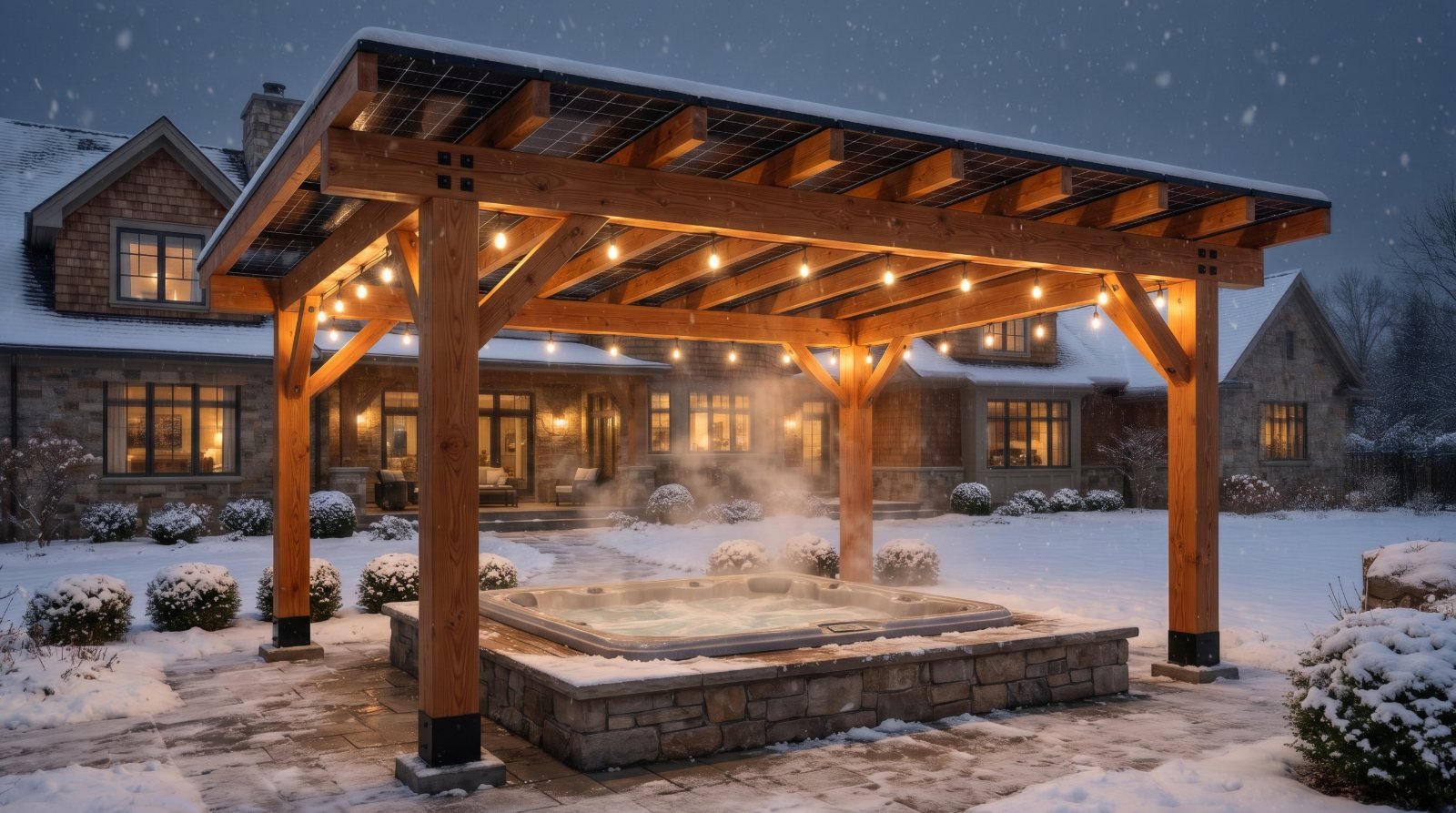
In short: Yes. Cold does not hurt a solar panel, and snow usually slides off by itself. The real question is the frame underneath. It has to be built for the snow where you live, and you need to know where that snow lands when it lets go.
A roof under a foot of snow makes very little until it clears. That can be an afternoon or a couple of days. The battery is what carries you across. Here is how to stretch it.
Clear panels only when the load is heavy, and use a soft broom, never a shovel. If a panel or a wire looks damaged, leave it alone and call the installer. Stay on the ground. It also helps to clear the ground below the low edge, so the snow has somewhere to slide. More on working from the ground.
Snow is heavy, and the weight lands on whatever holds the panels up. Building codes set a design snow load for every location. That is the weight of snow, in pounds per square foot, the roof must carry. The number is lowest at the coast and climbs as you go west and uphill. A structure drawn for Wilmington is not automatically right for Boone.
Your county building department can tell you the number for your address. The drawings for your structure should show the same number or a higher one.
A solid roof drops snow in a sheet, off the low edge, all at once. Keep that strip clear of doors, steps, the grill and anything that dents. Keep people and pets out from under it too, and do not stand there while it is letting go. Meltwater that drips onto a walkway will freeze there overnight, so ask where the water goes.
Across much of North Carolina, freezing rain is as likely a problem as deep snow. Ice adds weight to the frame, and icicles hang on anything they can reach. Design the mounting for ice buildup, keep wire connections up under the panels where icicles do not form, and use sealed equipment boxes so water cannot get in and freeze. Do not chip ice off glass. Let it melt.
A plain chart of what a 1 kWh and a 5 kWh battery will run and for how long, with the simple math so you can check your own appliances.
Read it →
With a portable generator and a battery power station, small steady things go on the battery and things that need a hard kick to start go on the gener
Read it →
A portable generator is a good tool, and where it sits is the whole safety question.
Read it →
Have a question we did not answer? Write to stan@generatorenvy.com. Stan grumbles, but a real person answers.
 Generator