Stan the Standby, the Generator Envy mascotGenerator Envy™
Backup power at home

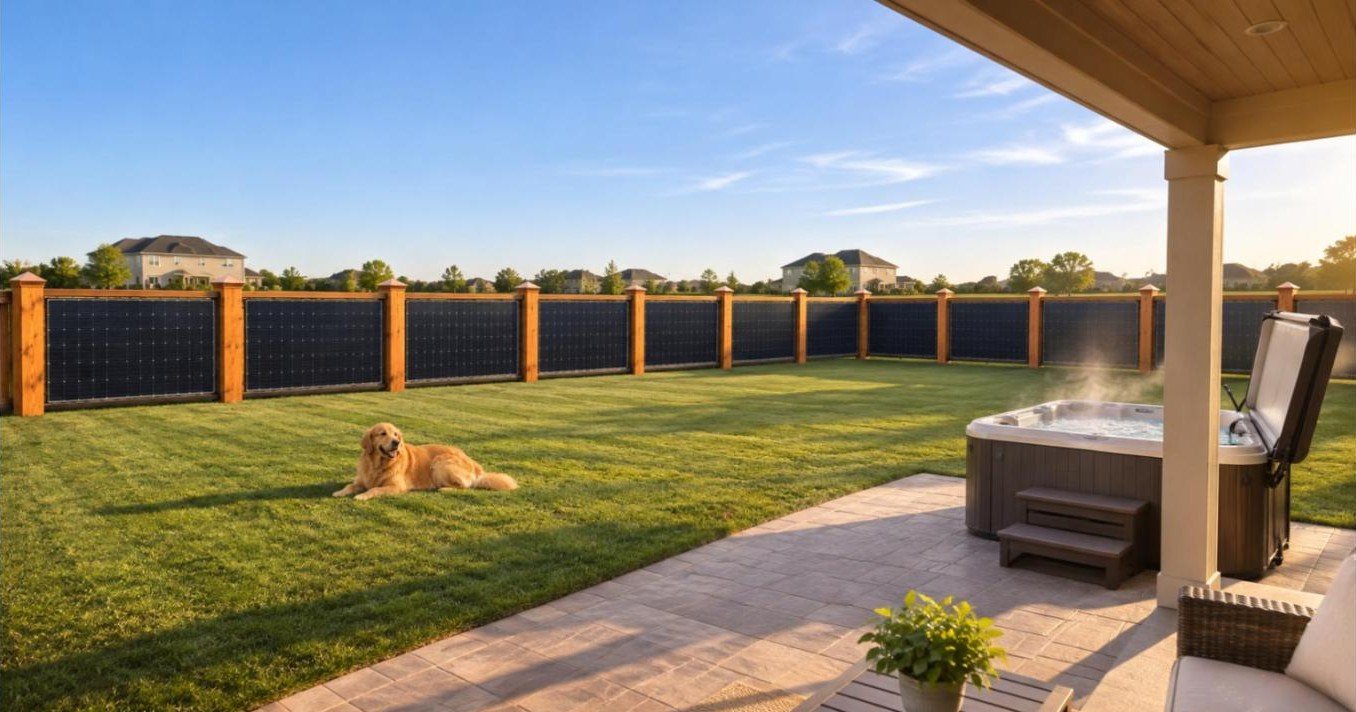
Concept picture of a backyard with a low solar garden fence, a hot tub on the patio and a golden retriever on the lawn
Concept picture of the look. This is a garden fence about 4½ feet tall, not a privacy fence. The real one adds a wood cap along the top rail.
With the pergola

The fence and the pergola in the same yard

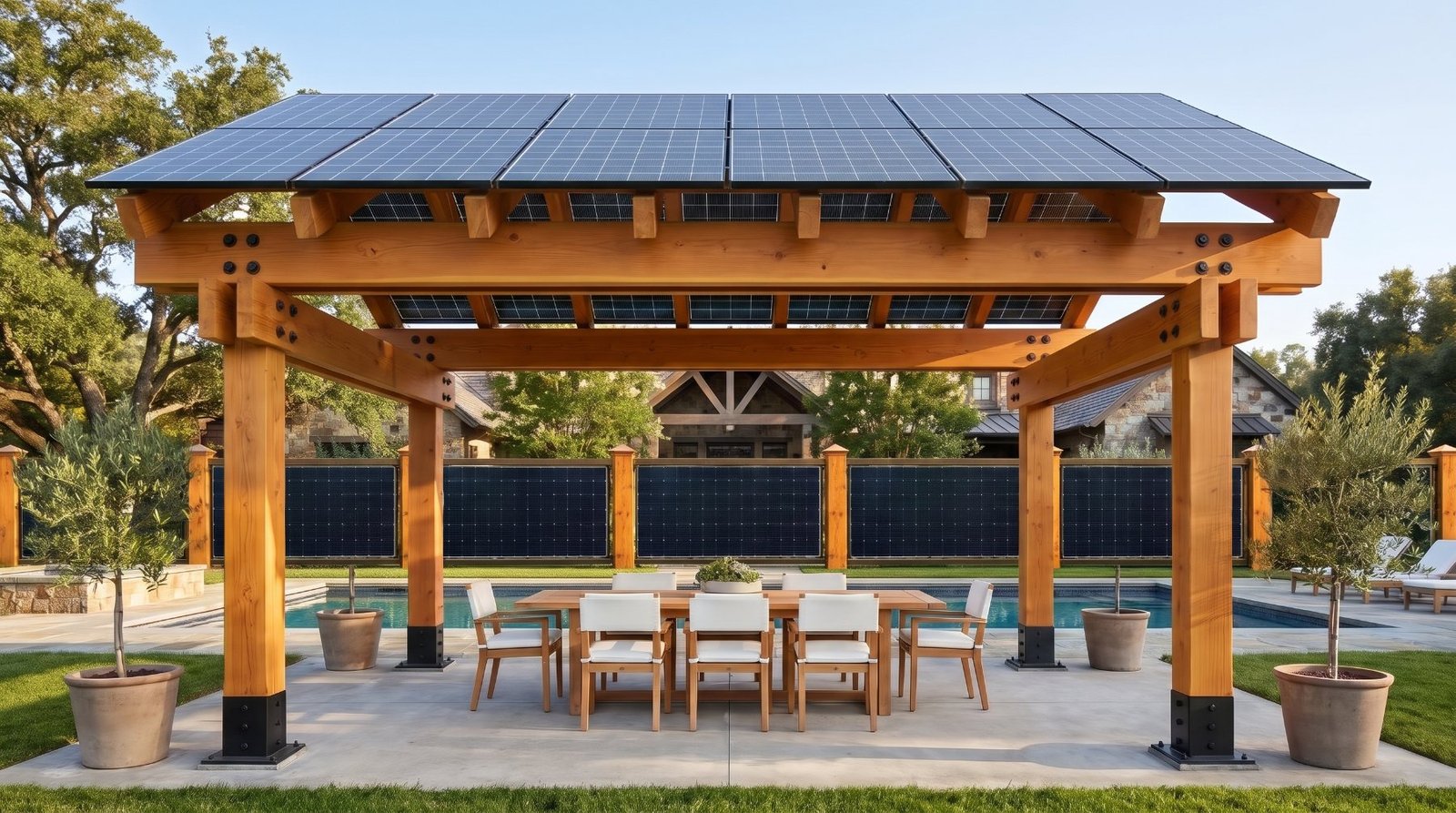
Solar pergola over a poolside dining table with the low solar garden fence running behind the pool
Poolside, midday. The pergola roof and the fence are the same panels and the same timber.
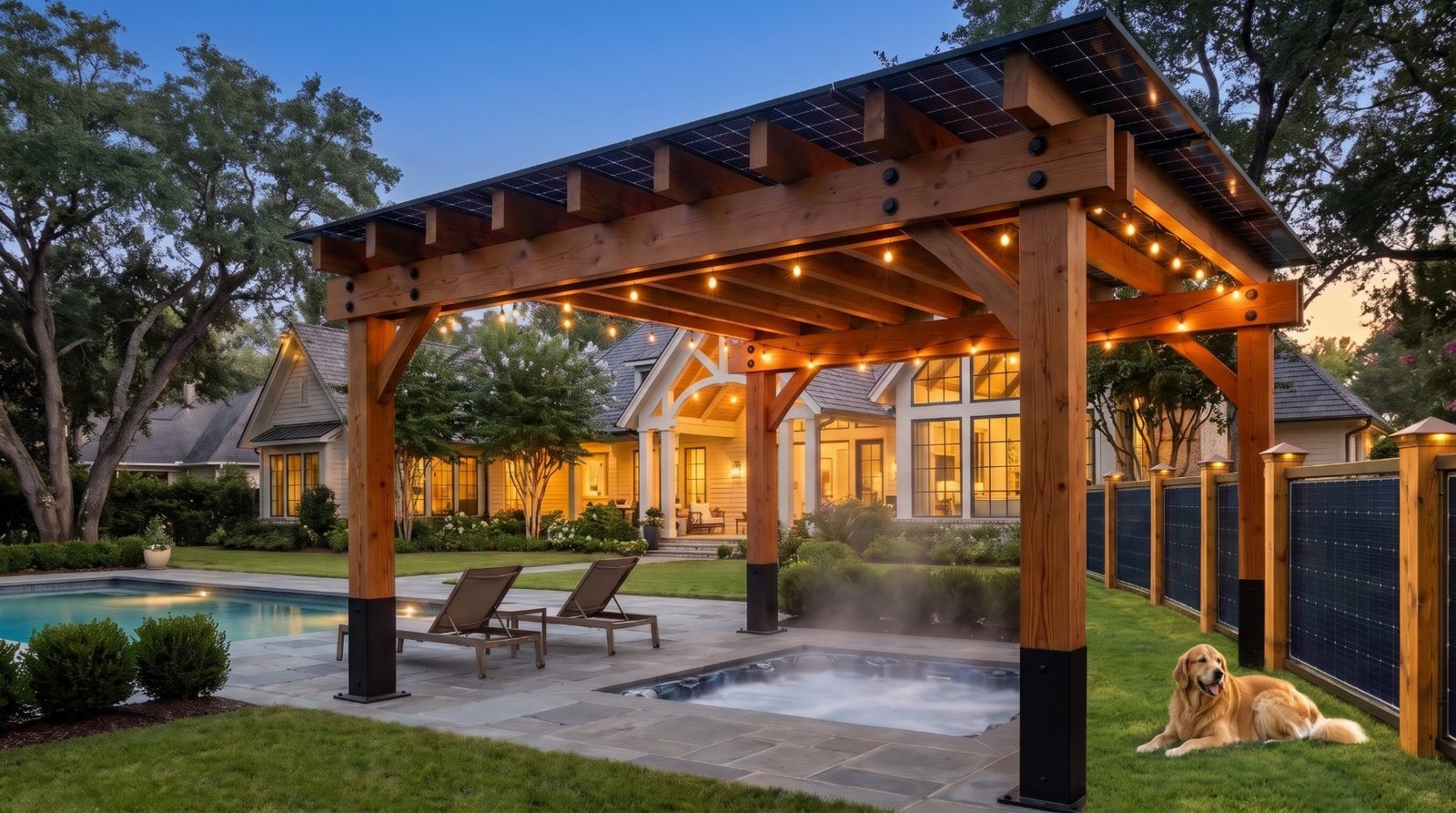
Solar pergola over a hot tub at dusk with string lights, the solar fence along the side lawn with lit post caps and a golden retriever
Hot tub at dusk. Lights on the post caps match the string lights in the pergola.
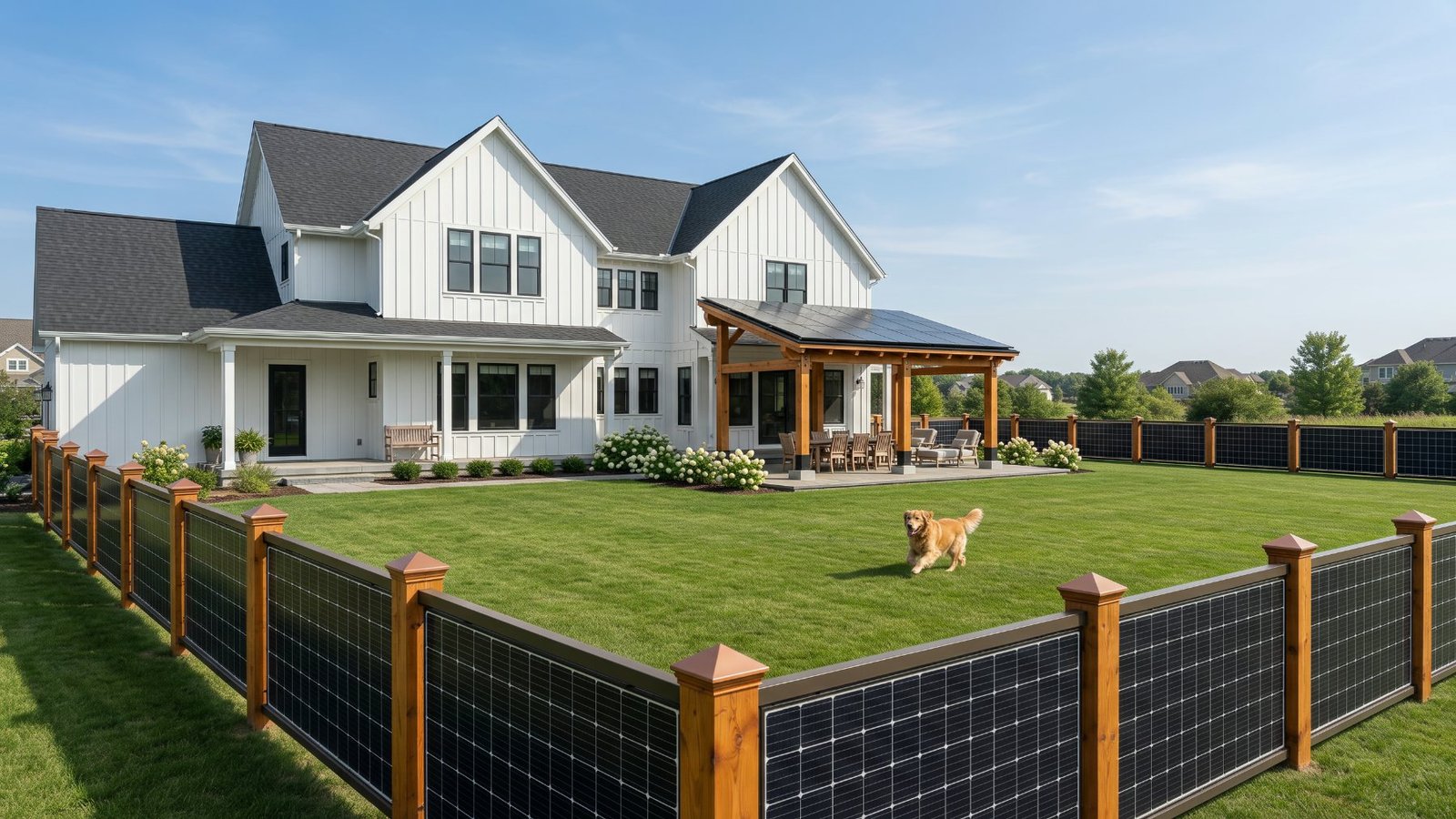
Farmhouse with a solar patio pergola and a low solar fence wrapped around the whole back yard, a golden retriever running on the lawn
The whole yard fenced in open sun. The dog stays in.
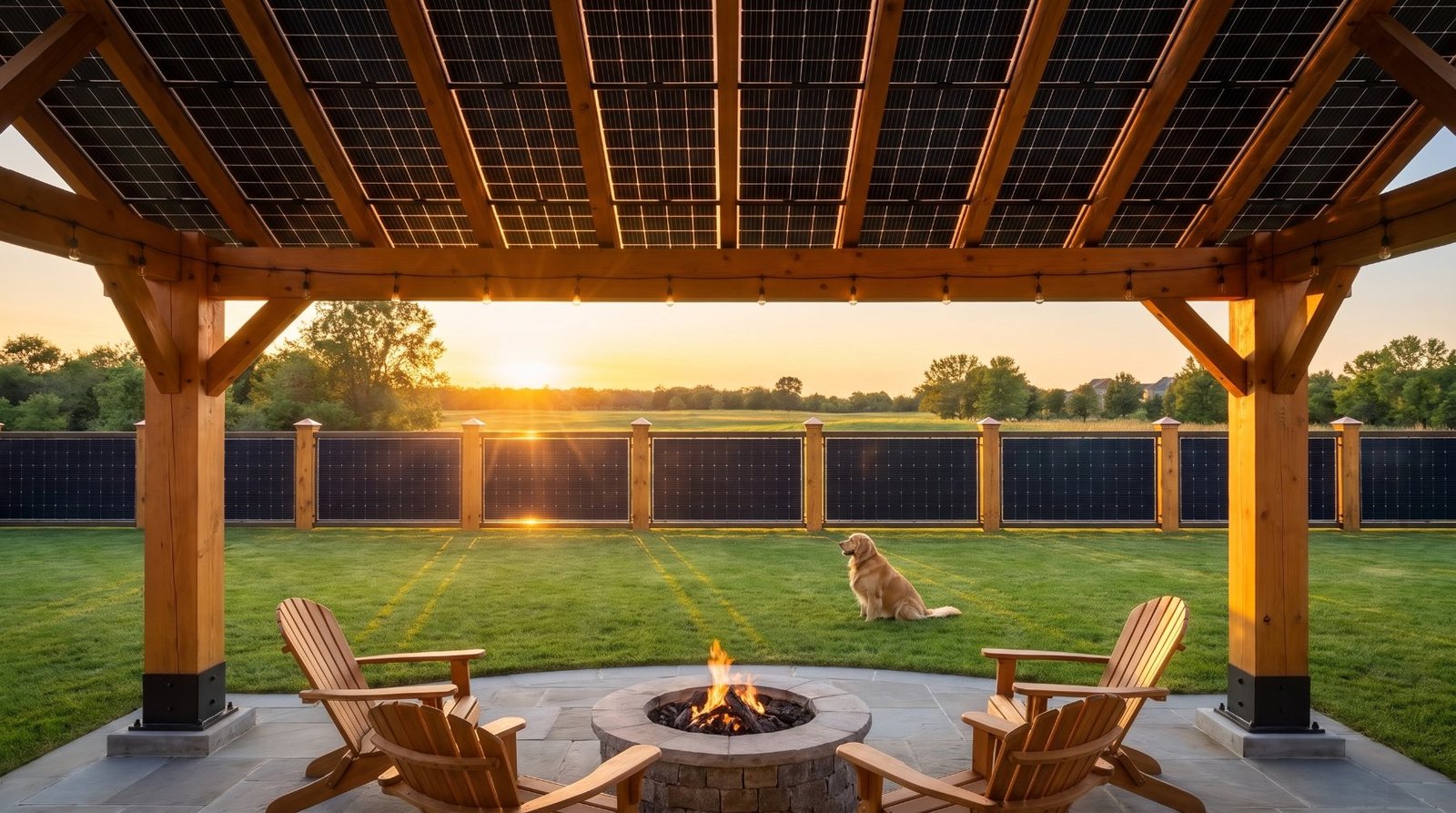
View from under a solar-roofed pavilion with a fire pit and chairs, looking out at the solar fence and a dog at sunset
From under the pavilion at sunset. The panels are the roof overhead and the fence along the back.

Concept pictures, made from our pergola pictures and the fence design. Heights are approximate.

Dogs

It keeps the dog in

The first question a dog owner asks about a garden fence is whether the dog can get out. The panels sit low, with the bottom rail about 3 inches off the grass, so there is no gap a dog can crawl under and no solid band below the panels. It stays a low garden fence, not a privacy fence.
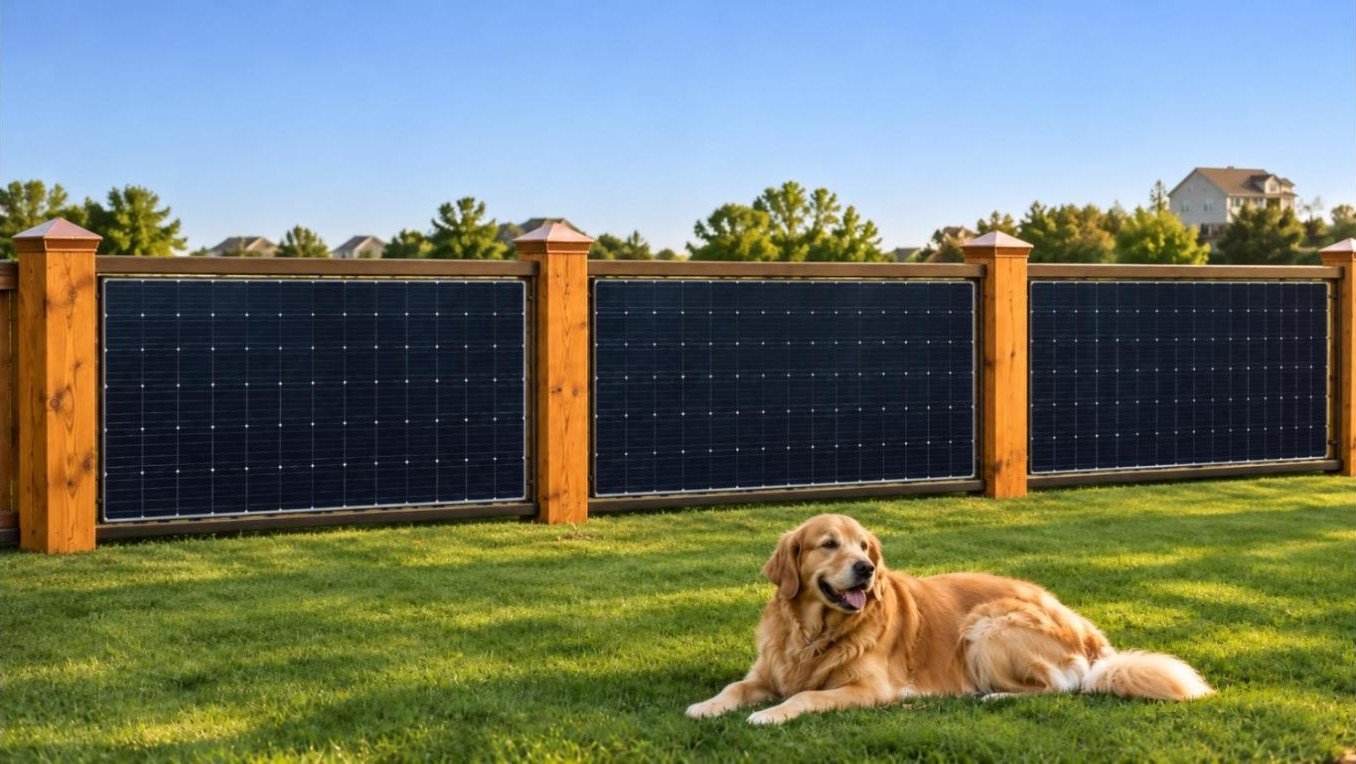
Low solar garden fence with capped wood posts and black panels sitting just above the lawn, golden retriever lying in front
Up close. One panel per bay, dark rails, wood cap, capped posts. The bottom rail sits about 3 inches above the grass.

Concept pictures. Heights and gap sizes are working figures until the engineer and die maker weigh in.

1 · What changed

Frame first, panel last

Several companies in Europe and Canada already sell fences and deck railings with solar built in. We read their installation manuals and drawings and kept the ideas that solved problems we had not reached yet.

The biggest change: both rails now fasten to the posts for good, and the panel tips in from the back afterward. In version 1 the top rail dropped down over the panel, so replacing one broken panel meant lifting the rail and the wood cap. Now a panel comes out by popping one cover and loosening a few clamps.
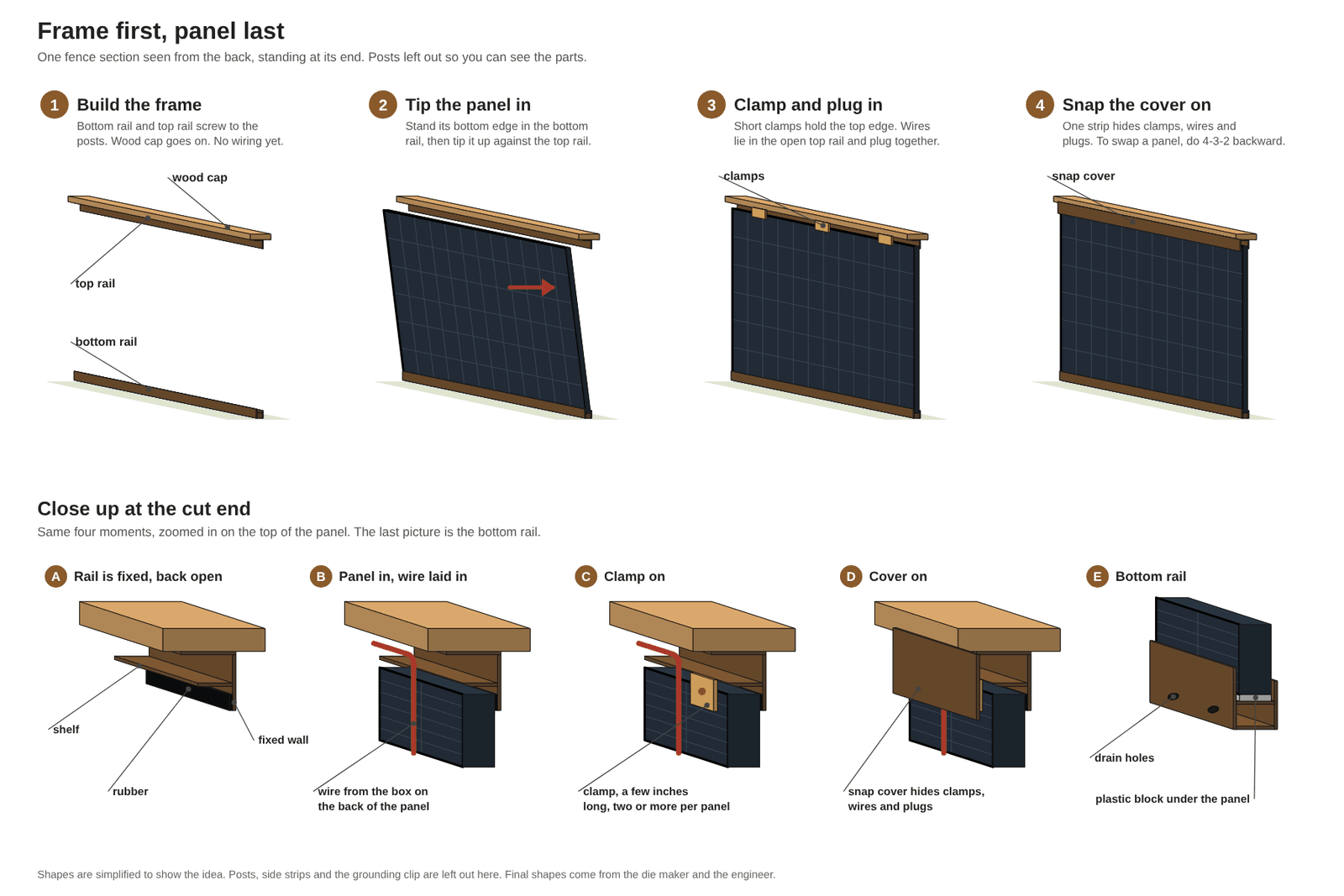
Four steps: build the frame, tip the panel in, clamp and plug in, snap the cover on, with close-ups of the top and bottom rails
Nothing screws into the panel. Its weight sits on plastic blocks in the bottom rail, and the clamps only keep the top edge from moving in wind.

This also splits the job cleanly. Step 1 is carpentry: posts, two rails, a wood cap. Steps 2 through 4 are the electrician's: set panels, plug in, cover.

2 · Wiring

Every wire and plug ends up in the top rail

Each panel has two wire leads coming from small boxes on its back. With the panel lying on its long side, one lead comes out near the top and one near the bottom. The top one goes straight up into the rail. The bottom one runs along the lower edge of the panel's own frame, then up one side behind a snap strip. Nothing lies in the bottom rail, where water collects.
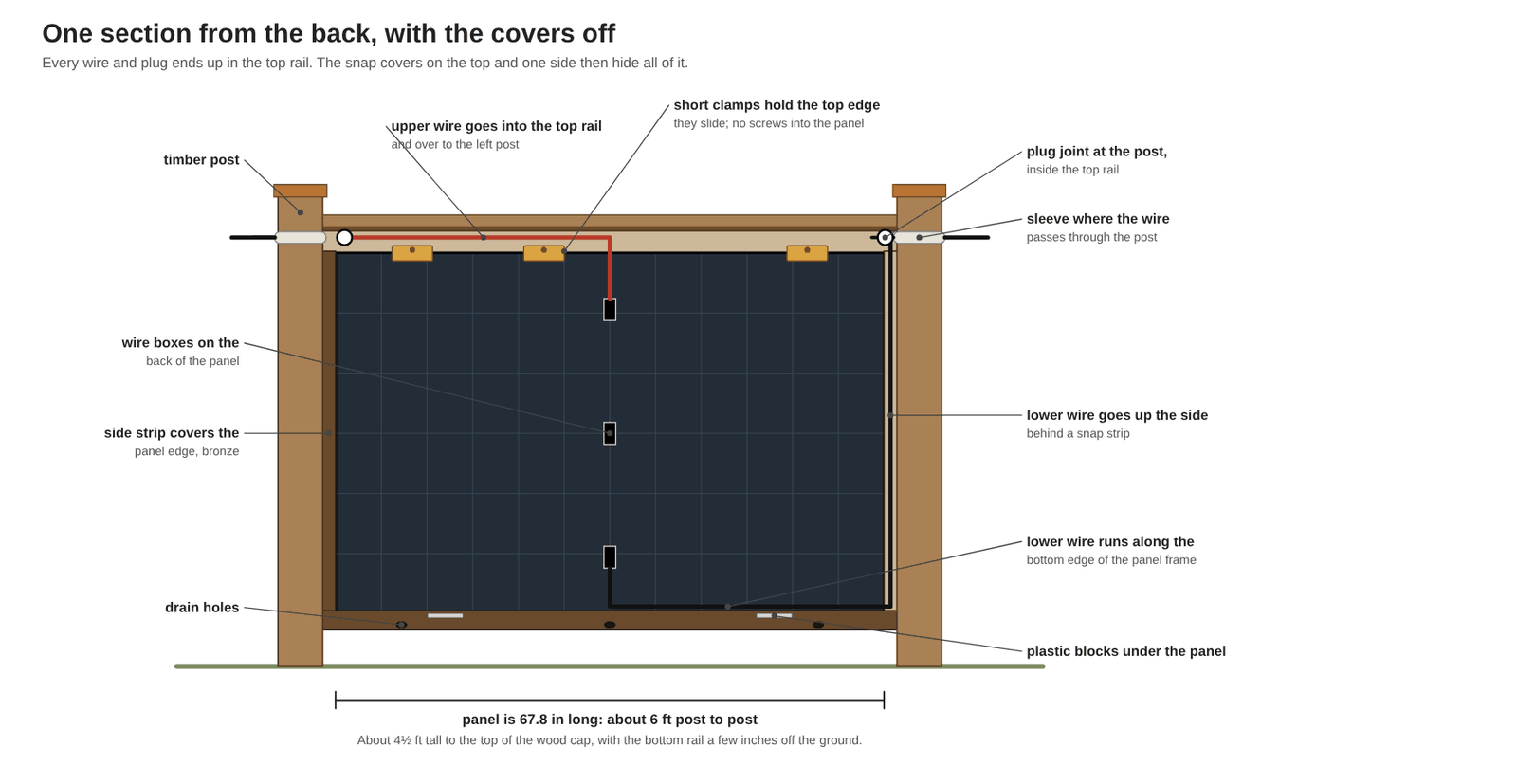
Back view of one fence section with covers off, showing clamps, wire routes, plug joints at the posts, plastic blocks and drain holes
Back view with the covers off. With them on, the back shows bronze strips on the top and sides and the black panel.
3 · Power

A hundred feet of fence is a full home system

Each section holds one 450-watt panel and takes up a little over 6 feet. The panel is two-sided, so it makes power from morning sun on one face and afternoon sun on the other.

450 W

per section, a little over 6 ft

7,200 W

from 100 ft of fence, 16 panels

15,750 W

from one pallet, about 215 ft

$26

of panel per foot of fence, at the pallet price below

Upright versus a roof. Field tests of two-sided panels standing upright put them close to tilted panels, not far behind. A Swiss outdoor test measured about 1½ percent less than a south-facing reference. Another study measured about 82 percent. A test near the equator, where the sun is overhead and upright panels do worst, came in around three quarters. Most real roofs are not the perfect roof either: wrong direction, wrong pitch, a chimney, a tree.

What helps. A fence line that runs north to south, so the two faces look east and west. Open sun on both sides. Shade from trees, a house wall or tall plantings is the thing to watch for on every site visit.

These watt figures are the rating on the panel label. What a given yard makes in a year depends on direction and shade and needs a site estimate.

4 · Borrowed

What we took, and from whom

These are products on sale today, so each idea below has already been built and installed by someone.

Idea now in our designSeen at
Top rail fixed to the posts; short sliding clamps hold the panel; one snap cover hides clamps, wires and plugsSprinz, Germany
Panel stands in a grooved bottom rail, with no fasteners in the panel itselfOsmo, Germany
Plastic blocks under the panel, about ¼ inch of height adjustment, drain holes in the bottom railSprinz
A protective sleeve wherever a wire passes through a post or through metalOsmo
Wire openings made ahead of time or with a supplied jig, never freehand on siteOsmo
Bottom rail held off the ground (Osmo uses 2 to 6 inches)Osmo
Rails fastened to posts with hidden screws and plugsOsmo
On a deck, wires and plug joints hide under one continuous cap railMitrex, Canada · Lumon, Finland
One fixed section size, with a matching blank panel for shady spots and odd lengthsOsmo · Sprinz
Sections stay level. On a slope the fence steps down instead of anglingLeeb, Austria (level only)
A small device per panel so one shaded panel does not drag down the restLeeb
The list of tests a railing on a raised deck has to passMitrex
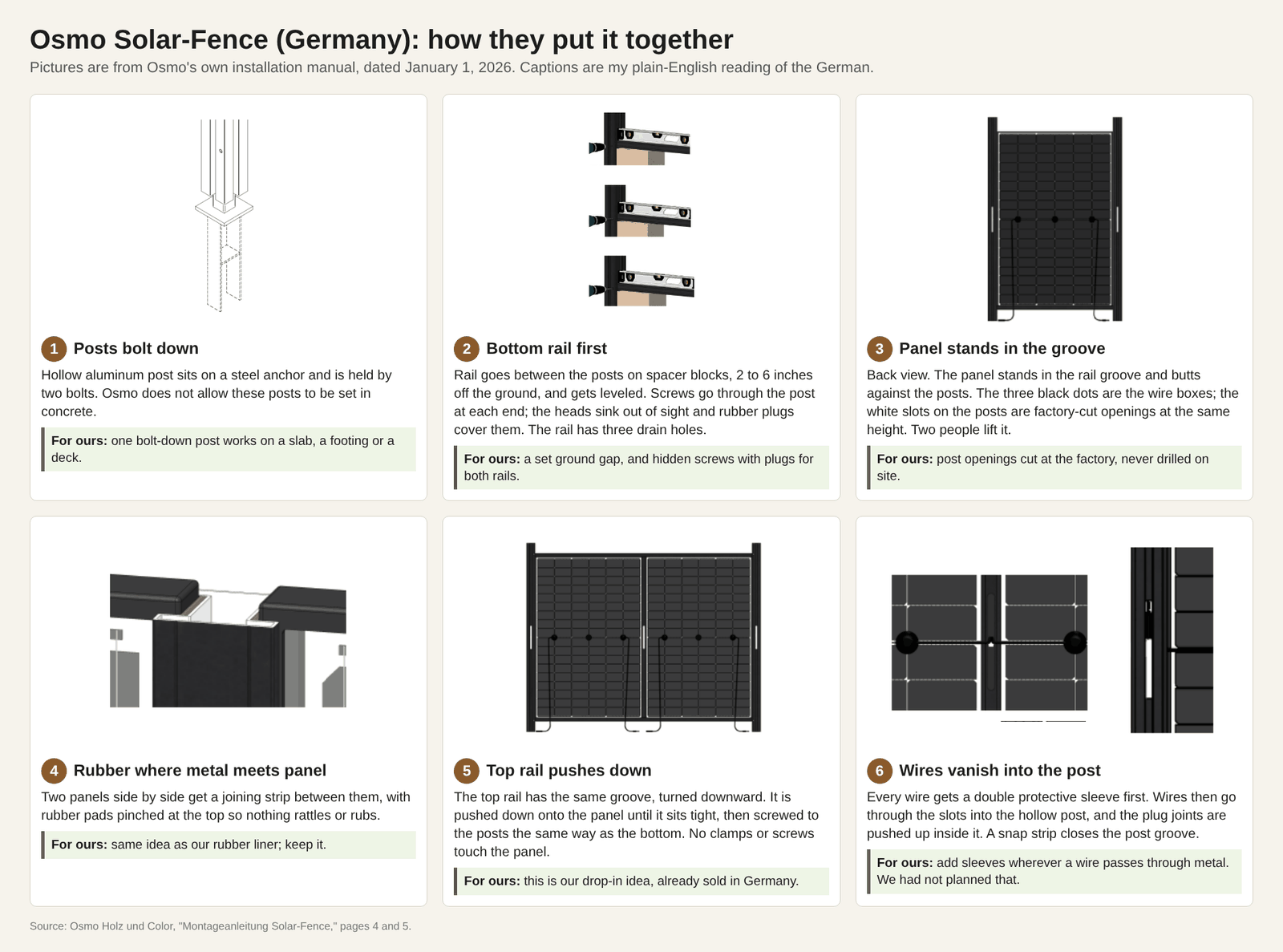
Board of drawings from the Osmo solar fence manual showing its bottom rail, panel groove, top rail and cable sleeves
How Osmo builds its solar fence, from its own installation manual. Theirs is a 6-foot privacy fence with the panel standing on end.
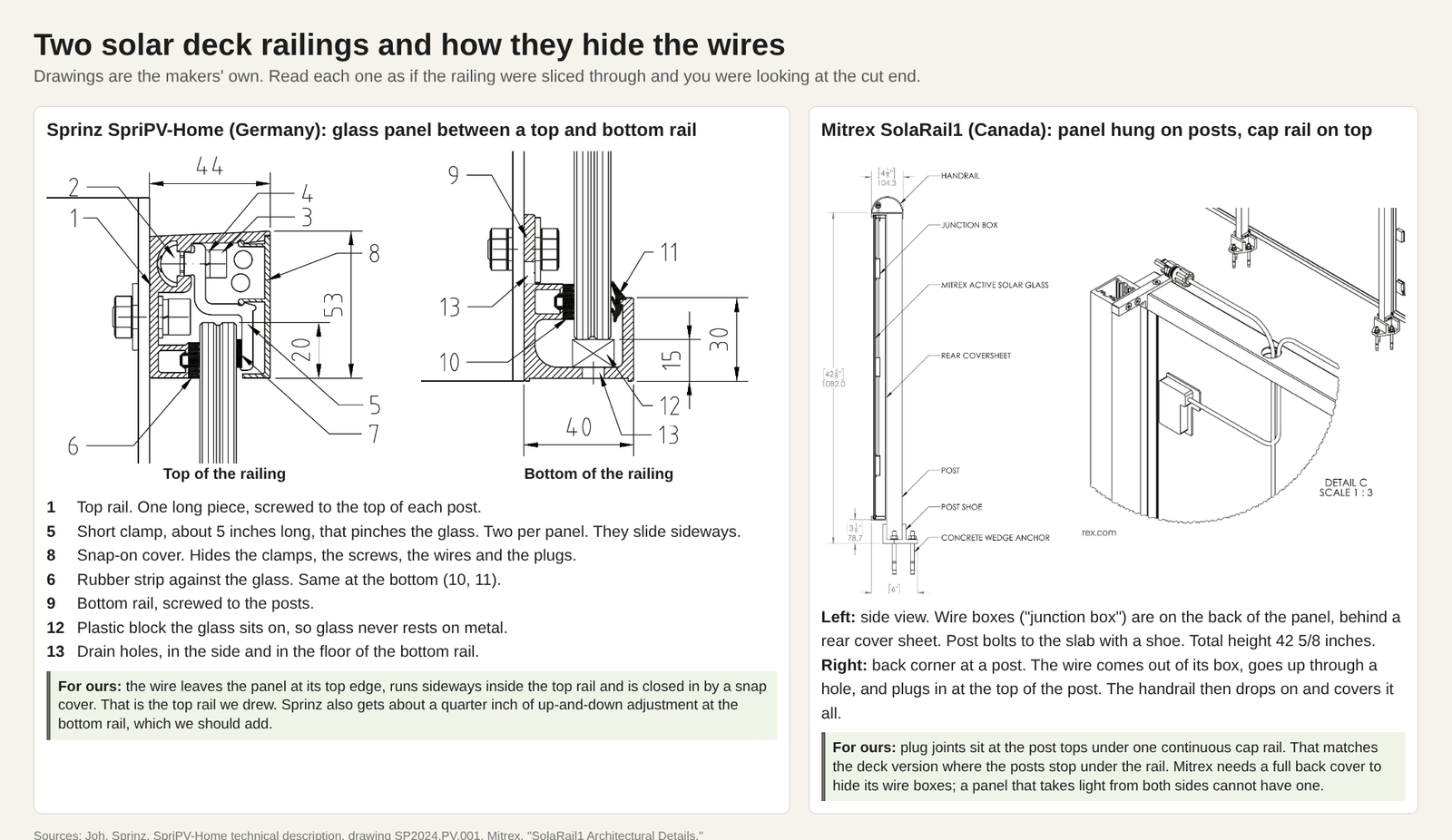
Board of drawings from Sprinz and Mitrex showing where their deck railings hide wires and plugs
How the railing makers hide wires and plugs, from Sprinz and Mitrex drawings.
5 · The kit

What arrives on site

Per section, from us

  • Top rail and bottom rail, bronze aluminum
  • Snap cover for the top, and two side strips
  • Clamps and plastic blocks
  • Wire sleeves, one extension lead, and the grounding clip
  • Hidden screws and plugs for the posts

Timber posts and the wood cap are bought locally to our cut list.

By the pallet: the panel we are looking at

CW Energy 450-watt, two-sided, assembled in the USA
Size, black frame67.8 × 44.6 × 1.18 in
Weight each47 lb
Panels on a pallet35
Fence from one palletabout 215 ft
Pallet price seen in early Octoberabout $5,600
That is, per panelabout $160

Two-sided means it makes power from light on either face, which suits a fence. One seller's listing; price and supply need confirming. Two people lift each panel.

6 · Versions

Fence now, deck railing next

The same rails, clamps and covers make all three. What changes is the panel and the posts.

Now

Garden fence

Full-size panel, about 4½ feet tall, timber posts standing above the rail with caps. Yards, gardens, pool surrounds that are not the safety barrier.

Next

Low deck railing

A shorter panel, about 27 inches, makes a 36-inch railing you can see over from a chair. Posts stop under one continuous wood cap. For decks close to the ground.

Later

Raised deck railing

Once the drop is more than 30 inches the railing is a safety guard and has to be rated. That is its own product with its own tests. See section 7.
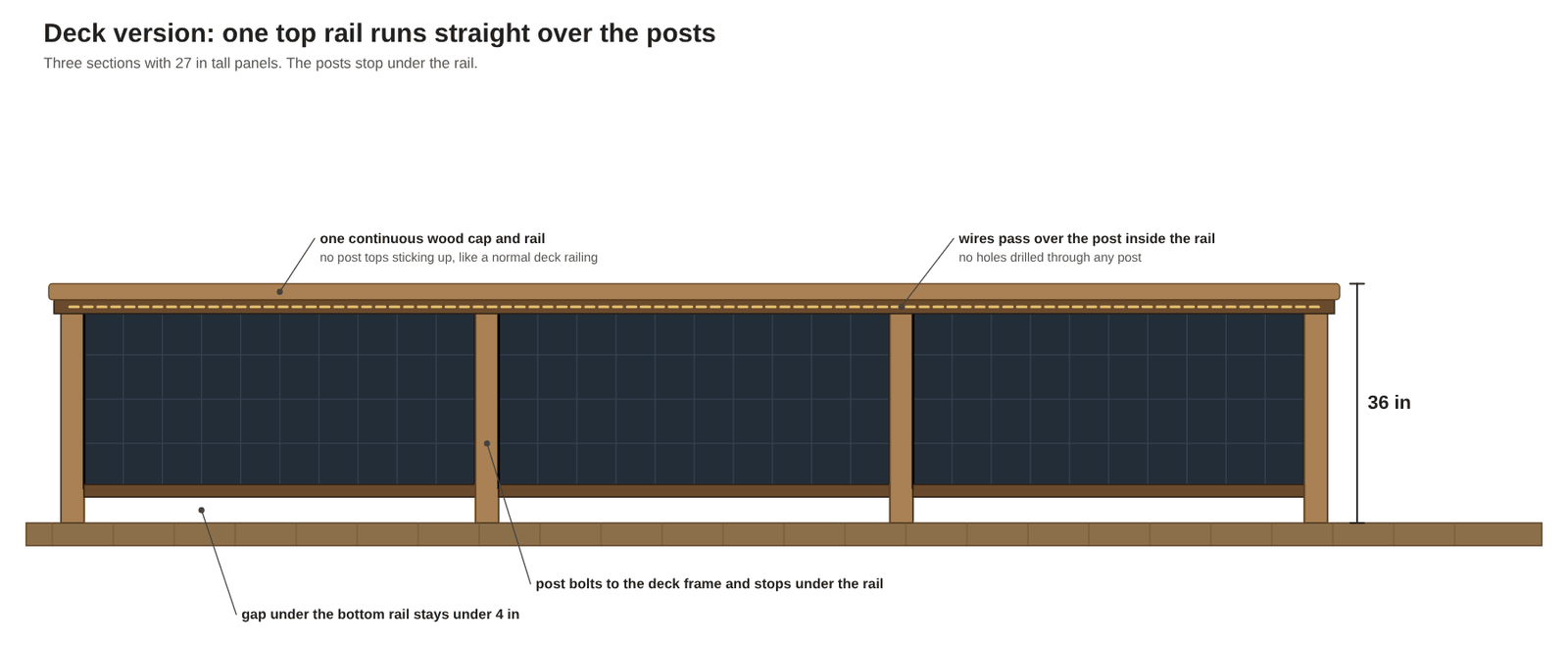
Deck version with three sections of 27 inch panels under one continuous wood cap, 36 inches tall
Deck version. The same rails and clamps, a shorter panel, and one cap running over the posts. The full-size fence panel would stand about 52 inches on a deck and block the view from a chair.
7 · Raised decks

What it takes to get a railing approved up high

On a raised deck the railing keeps people from falling, so the building code treats it as a guard. A guard has to hold a 200-pound push on the top rail and 50 pounds on any one square foot of the infill, and any glass in it has to be safety glass. Makers prove this once with a lab and get an evaluation report, a document an inspector anywhere can accept.
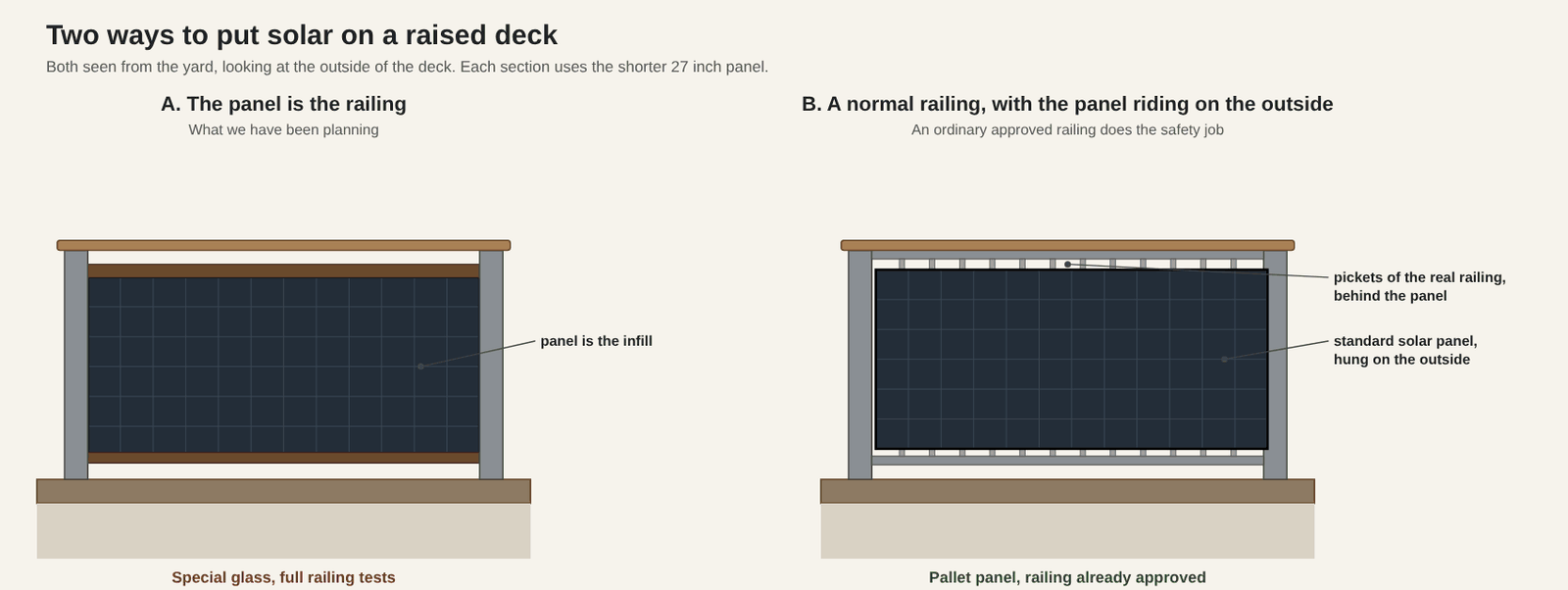
Two ways to put solar on a raised deck: the panel is the railing, or a normal approved railing with a standard panel hung on the outside
Two routes. A is a new certified product. B uses a railing that is already approved and adds the panel to it.

A. The panel is the railing

  • Needs a panel made of laminated safety glass, two sheets bonded together, not a pallet panel.
  • That glass already exists with its paperwork. Onyx Solar (Spain, with a New York office) and Mitrex (Canada) sell it. In Germany the glass and the railing are approved separately, which is the model to copy: buy certified glass, test only our posts, rails and clamps.
  • Aluminum posts for this version. Wood posts are hard to certify.
  • Outside guesses on the report: roughly $25,000 to $80,000 and 4 to 9 months. No lab has quoted it yet.
  • Start with one panel size, one post, one span.

B. Normal railing, panel on the outside

  • An ordinary approved railing does the safety job. A standard panel hangs on the yard side.
  • Uses the pallet panel and skips most of the testing.
  • Open question for a building official or engineer: does glass that close to a walking surface still have to be safety glass?
  • Still needs an engineer's check on the extra wind load and weight on the railing.
  • This is the cheap way to find out if people want solar on a deck before paying for route A.
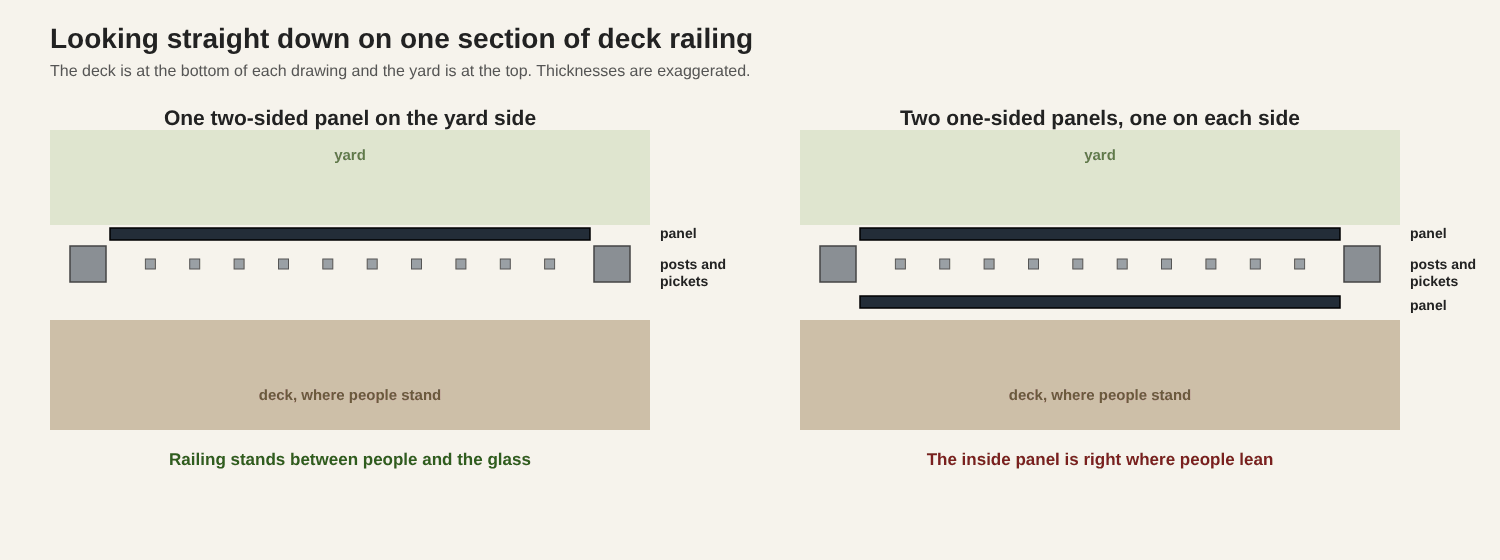
Top-down view comparing one two-sided panel on the outside of a railing with two ordinary panels, one on each side
One two-sided panel outside, or a panel on each side. A panel on the deck side is where people lean, so it brings the safety-glass question back. Current thinking: one two-sided panel outside, and if the inside needs dressing up, a bronze or wood-look slatted cover that is not glass.

Either way, attached to a house: the electrical code calls for a shutoff at each panel so firefighters can kill the power, and every metal frame has to be tied to the ground wire. A possible first step in North Carolina is one pilot job approved on an engineer's stamped calculations, before paying for the national report.

8 · Market

Is there a market? Three outside opinions

We put the same blunt question to Gemini, ChatGPT and DeepSeek on November 21: if the deck railing got certified, would it sell? These are their opinions and guesses, not research. No trustworthy market-size number for solar railing turned up anywhere.

First three years, one small companyInstalled price it has to hit, no batteryBest product
Gemini150 to 300 jobs in total; $400,000 to $1.2 million in kit salesRoute B under $275 to $325 a foot. Route A runs over $450 a foot.Pergola, then fence
ChatGPT10 to 25 jobs, then 30 to 75, then 75 to 150 a year. Says it could be off by three times either way.Fence $150 to $200 a foot. Deck rail $200 to $250 a foot.Pergola, with fence the best kit to scale
DeepSeekA few hundred thousand to low millions in salesUnder $150 a footFence

Where all three agree

  • A real specialty market, not a mass market.
  • The buyer is a well-off homeowner who wants backup power and does not want panels on the roof, plus custom builders.
  • Deck railing is the weakest of the three: hardest approval, fewest watts, and people buy railings to keep the view.
  • Sell the fence first. Do not pay for certification until people have shown they will buy.
  • Homeowner associations can say no. Big tract builders will not touch it.
  • Two trades is a real snag: deck builders will not wire, electricians will not build railings.

Our read

  • It backs the order already picked: fence first, pergola as the showpiece, deck railing later.
  • The two-trade snag is why the kit splits the work: a carpenter builds the frame, the electrician sets and plugs in panels.
  • The sale is having power when the grid is down, not payback. The honest comparison the customer will make is the total price against a generator.
  • The certified railing looks more like an apartment and condo balcony product. That is where Mitrex and Lumon are selling: bigger orders, slower sales.
  • On a short deck the watts are small. Thirty feet of railing is about 5 full-size panels, roughly 2,250 watts.
9 · Where to start
First

Powerhouse Fence

Easiest approval because nobody falls off a fence. Long runs mean real power. Ships on a pallet. This is the kit to prove.

Showpiece

Generator Envy

Already under way. Backup power you can sit under. The outside opinions rank it first because people want the shade and the outdoor room anyway. Bigger ticket, more custom.

Second kit

Powerhouse Rail

Low decks first, then the raised-deck version once demand is shown. Biggest long-run reach if the certification is done once and done right.

Working name for dealers: Powerhouse Fence & Rail. Name candidates and open web addresses are in section 15. Bugging Out Solar stays the story and education site that sends people to it.

10 · Position

We are not a privacy fence

The American solar fence we found on the market, SOL Fence, sells a tall privacy fence: two-sided panels up to 450 watts in aluminum frames on galvanized steel posts driven 4 feet down, rated for 115 mph wind, with a 30-year performance warranty. They say it costs about three times cedar, with batteries and hookup extra. They do not publish prices or the height, and they sell through their own certified installers.

Ours is a garden fence you see over. Timber and bronze, about 4½ feet, something that belongs next to a flower bed. Different yard, different customer.
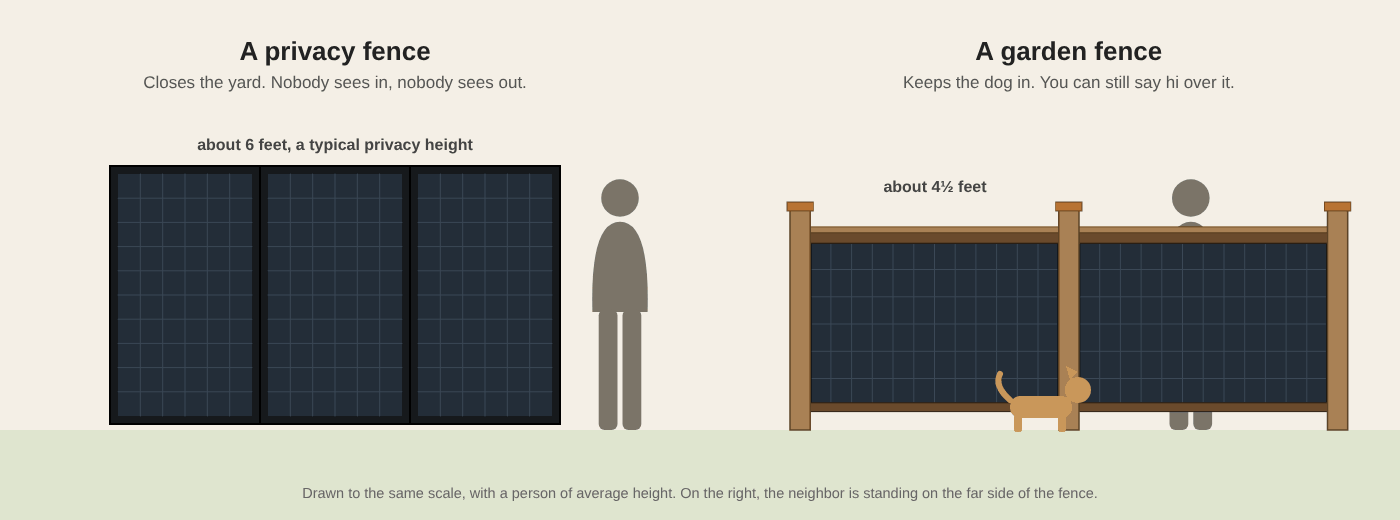
Same-scale drawing of a 6 foot solar privacy fence next to the 4 and a half foot Powerhouse garden fence
Same scale. A 6-foot privacy fence beside the 4½-foot garden fence. Their exact height is not published; 6 feet is the usual privacy fence.

A comparison page for buggingoutsolar.com is written and has been through two outside reviews. It is fair to them and says plainly that ours is still in design and not for sale. It is not live yet. Naming a competitor is worth a lawyer's look before it goes up.

11 · Tax credit

Businesses and nonprofits: most of the fence should count

This is about the credit for businesses, churches and other nonprofits. The rule leaves out buildings and their structural parts. On a pergola the timber frame is a structure people stand under, which is why the framing looked doubtful. On the fence, the posts and rails exist to hold the panels up, so they have a fair argument as mounting, the same as racking on a roof.

The weak spots: it is also a fence, which is a second use, and a decorative wood cap is not holding anything up.

The clock matters. A project started after July 4, 2026 has to be finished and running by the end of 2027 to qualify, and there are new limits on parts from certain foreign countries, which is one more reason for the American-assembled panel.

Not to be promised to a customer. Before any dealer says this out loud we need a tax professional's written opinion on how much of the fence counts, and the customer needs their own accountant.

12 · How it gets sold

We make the kit and the marketing. Dealers sell and install.

Our side

  • Design, rails, the stamped engineering and the installation manual.
  • Panels by the pallet, shipped to the job.
  • Training on the kit.
  • The marketing: the sites, the pictures, the phone number the calls come in on.

The dealer's side

  • An electrician with a territory, and his own framer or carpenter.
  • Sells it and puts it up.
  • Owns what goes on inside the house: battery, inverter, the tie-in. That equipment changes too fast and varies too much for us to standardize.
  • Homeowner jobs are meant to stay under $40,000. Bigger commercial and nonprofit jobs go through a licensed contractor.
13 · Open

Still to settle

The pictures show the idea, not finished shapes. These are the items between here and a kit someone can order.

Engineering and supply

  • Engineer's stamp: wind on the posts and rails, footing depth, clamp count.
  • The panel maker's written OK to hold the panel upright by its top and bottom edges, so the warranty stands.
  • A die maker to turn about five small shapes into real extrusions, with cost and minimum order.
  • Confirm the panel: supply, current pallet price, where its cells are made.
  • A patent attorney's look before this goes public.
  • A price. Nothing here says what a foot of fence costs installed, and that is the number every outside opinion turned on.

Details on the job

  • Posts: set in the ground the usual way for a fence, and a bolt-down base for slabs and decks.
  • Grounding: a clip per panel that ties every frame to the ground wire.
  • Wire length: the lower lead needs about 7½ feet. Order panels with long leads or add one extension per panel.
  • Shade: whether to add a device per panel, and where it hides. A deck attached to the house will likely need a per-panel shutoff anyway.
  • How long one section takes two people, start to finish.

Raised deck

  • Ask a building official or engineer whether a panel hung outside an approved railing has to be safety glass.
  • Prices and sizes for certified solar glass from Onyx Solar and Mitrex.
  • Test plan and quote from a lab that writes evaluation reports (ICC's lab, Intertek).

Business

  • Trademark and web address check on Powerhouse Fence & Rail.
  • A tax professional's written opinion on the credit.
  • A lawyer's look at the comparison page before it goes live.
  • One real fence built and photographed. Every picture so far is a drawing or a concept image.
14 · For Matt

Questions only someone who builds can answer

Building it

  • Timber posts in the ground with a 47-pound panel every 6 feet in coastal wind: what size post and how deep would you want before an engineer says so?
  • Is a two-person lift of each panel into the frame from the back realistic along a property line with a neighbor's fence or hedge behind it?
  • How long would 100 feet take a two-man crew: posts, rails, cap?
  • Where does this go wrong on a real job: slopes, gates, corners, short leftover lengths?
  • What would you want in the box that is not on the kit list?

Selling it

  • Which of your generator customers would look at this, and what would they ask first?
  • What does a nice 4½-foot wood or aluminum garden fence go for per foot, installed, around Oriental?
  • Fence, deck railing or pergola: which would you rather walk a customer up to?
  • How do the towns and neighborhoods you work in treat a fence like this: permits, height limits, homeowner associations?
  • Who handles the battery and tie-in on your jobs today, and would that person want this kit?
15 · Name

What to call it

Bret's lead pick is FenceLine Power. The tagline does the explaining: "The generator built into your fence." Buyers search for generators, not solar fences: about 90,000 searches a month for "generator for home", 74,000 for "solar generator" and 14,800 for "quiet generator", against about 2,400 for "solar fence". So the word generator goes in the tagline, the ads and the page titles.

All four .com addresses below were open on November 22, 2026. None is bought yet.

FenceLine Power

fencelinepower.com

Bret's pick. Sounds solid and established, and covers the fence, the rail and the pergola without a stretch. No company is using it.

FenceLine Generator

fencelinegenerator.com

The same name with the word people search for built in.

SunFence Generator

sunfencegenerator.com

Says solar and generator outright. Clean in the US, but a UK company already sells solar fences as SunFence.

SunFence Energy

sunfenceenergy.com

Sounds like a real company. Does not put a generator in the buyer's head.

Taglines

  • The generator built into your fence.
  • The silent generator.
  • No gas. No noise. Just power.
  • The fence that keeps the lights on.

Ruled out

  • Power Fence / PowerFence: registered trademarks on electric fences, and one covers solar panels and batteries.
  • Porchlight Power: the .com is taken.
  • Firefly Solar, Self Reliant Solar: existing solar companies.
  • Never Dark: too close to the registered "Never Go Dark".
  • Lightning Bug, Disruptor Solar: not the feeling we sell.

Newest: Juiced Fencing

Bret said it "has a little bit of a ring." The picture is the sun beaming down on the fence and a lightning bolt for the power it makes. Tagline: "Off-grid by choice." Ad line: "Juiced by the sun."

Open .com addresses on November 22, 2026: juicedfencing.com, juicedfence.com, juicedsolar.com (a parent name that also covers the rail and the pergola), juicedrailing.com and juicedbythesun.com. None is bought yet.
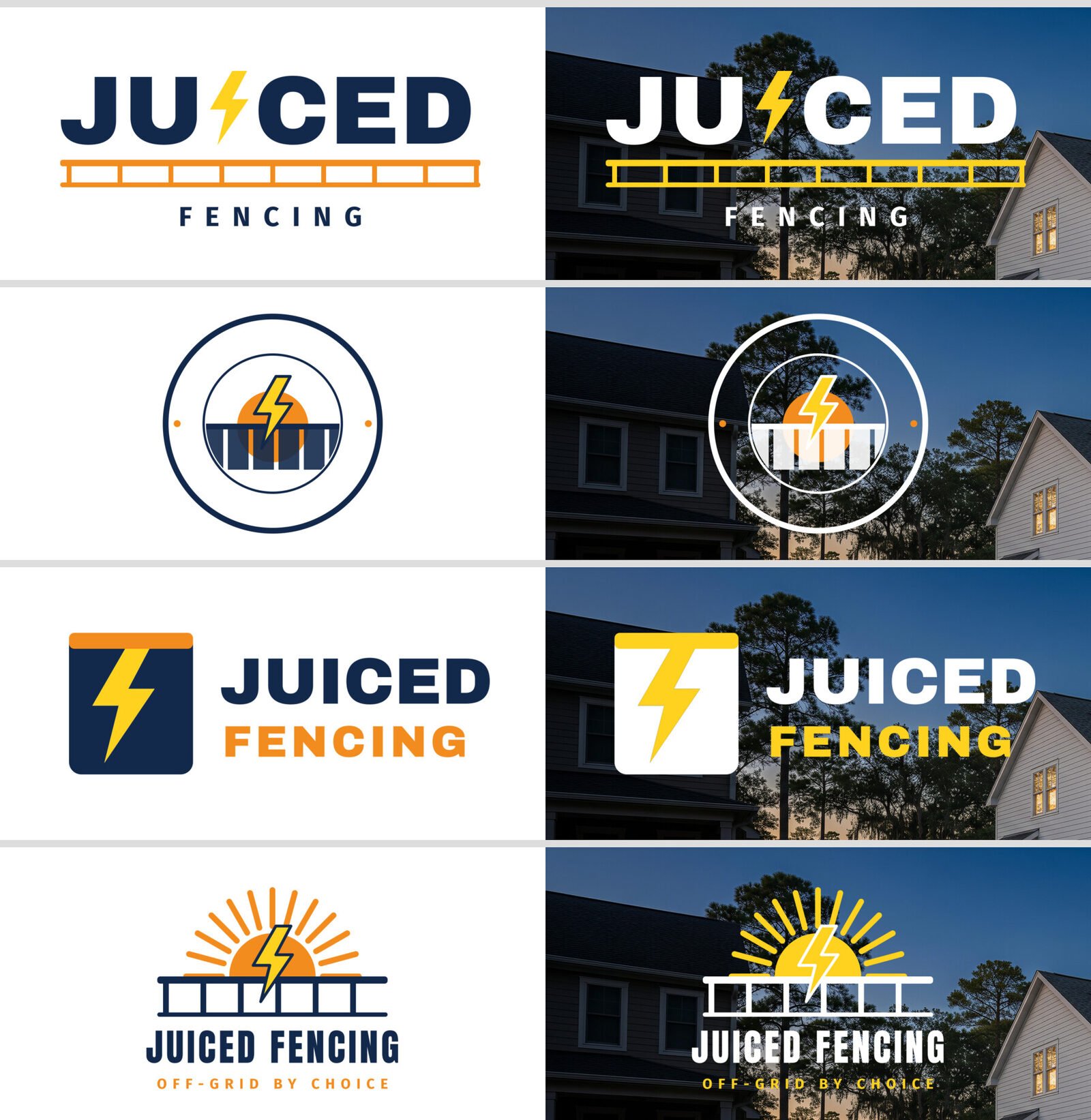
Four Juiced Fencing logo designs, each shown in navy on white and in white over a dusk photo: a wordmark with a lightning bolt as the letter I, a round seal, a solar panel with a bolt, and a sun rising over the fence rail
Four logo designs. Left: on white. Right: straight on a photo, nothing behind it. From the top: the bolt as the I in JUICED, the round seal, the panel and bolt, the sunrise over the rail.
First Juiced Fencing logo: a sun rising behind a three-panel solar fence with a yellow lightning bolt striking through it, JUICED FENCING and OFF-GRID BY CHOICE beneath
The first design. Sun, fence and bolt in one picture.
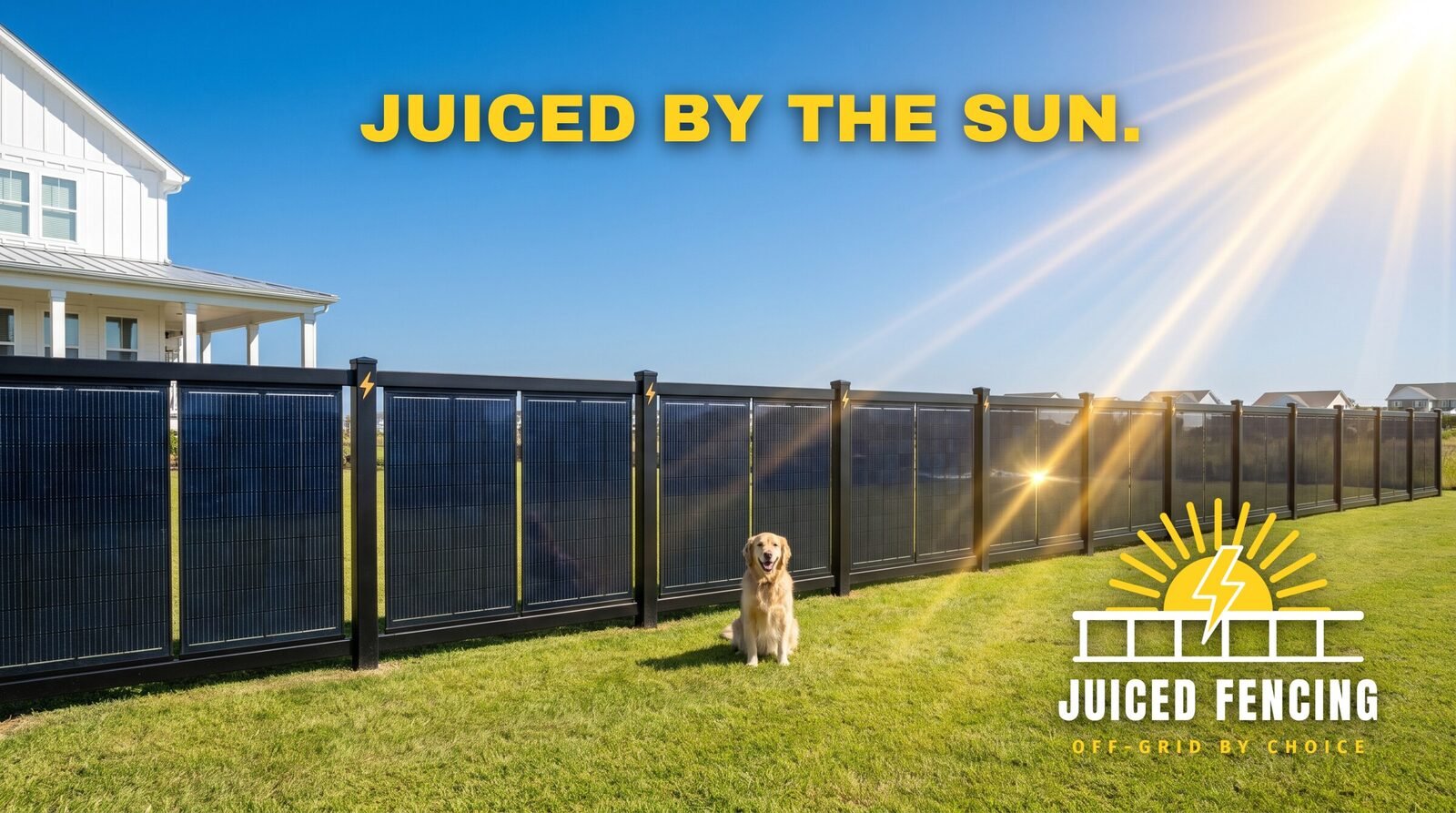
Ad: a low solar fence across a sunny back lawn with a golden retriever, sunbeams on the panels, headline Juiced by the sun and the Juiced Fencing logo
Ad: Juiced by the sun.
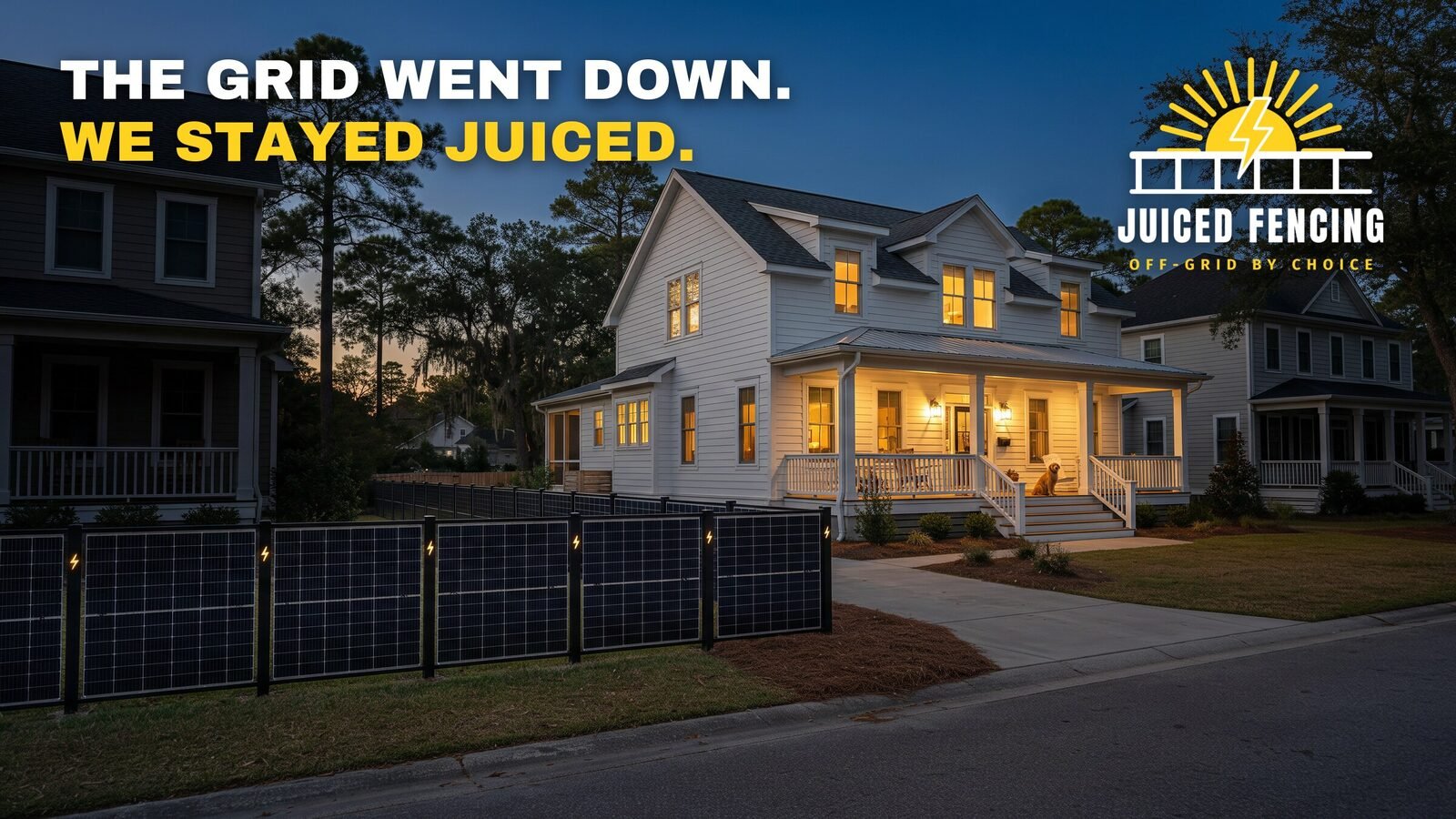
Ad: at dusk during a power outage the neighbors' houses are dark and one home is lit, the solar fence in front with glowing bolts on the posts, headline The grid went down. We stayed juiced.
Ad: The grid went down. We stayed juiced. This one puts a generator in the buyer's head.
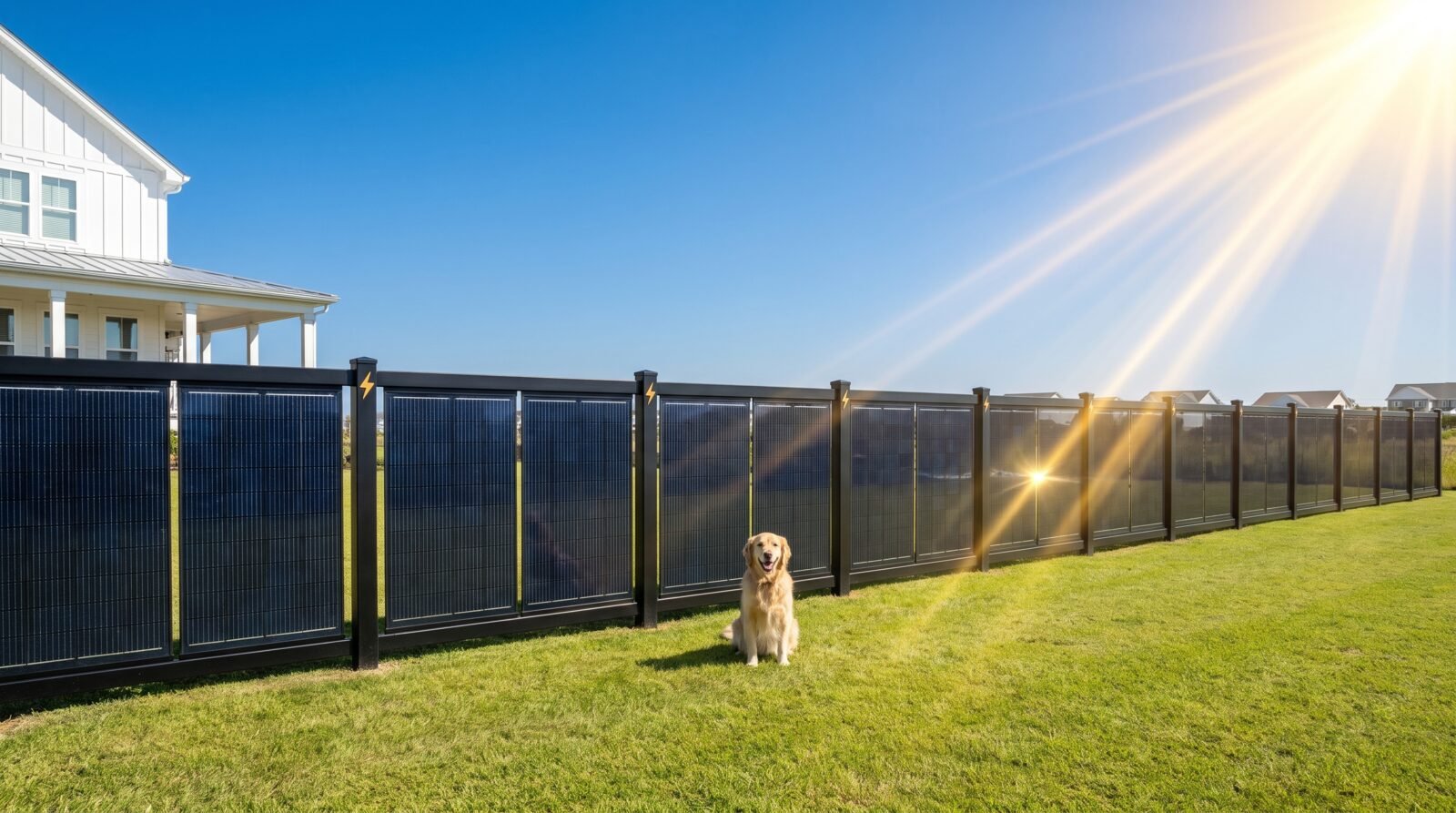
Low black solar fence along a sunny back lawn with gold lightning bolt emblems on the posts and a golden retriever sitting inside
Backyard, midday. Gold bolt on every post.
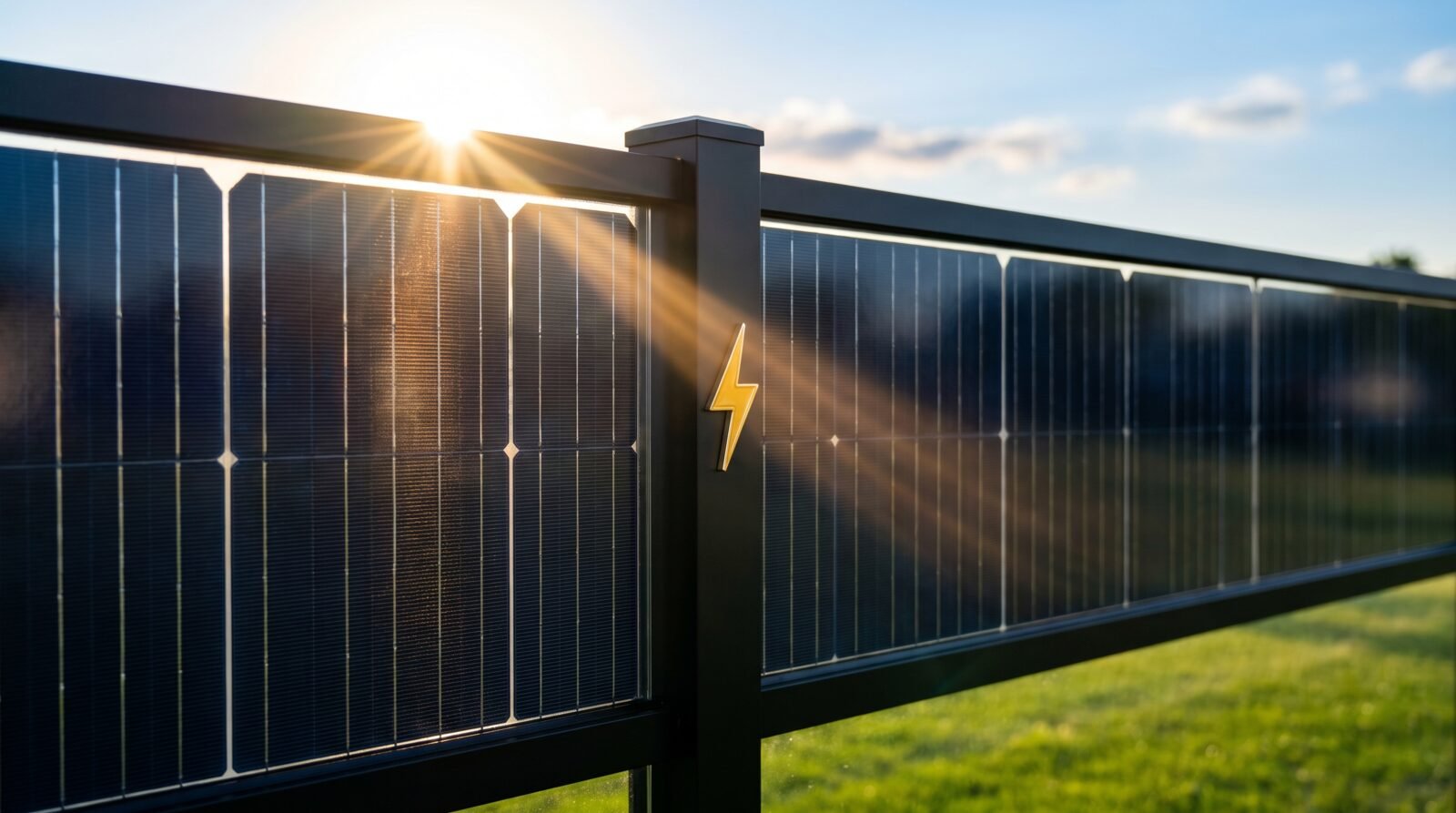
Close-up of a black fence post with a gold lightning bolt emblem, late sun glinting off the solar panel beside it
Up close: the bolt emblem on the post.
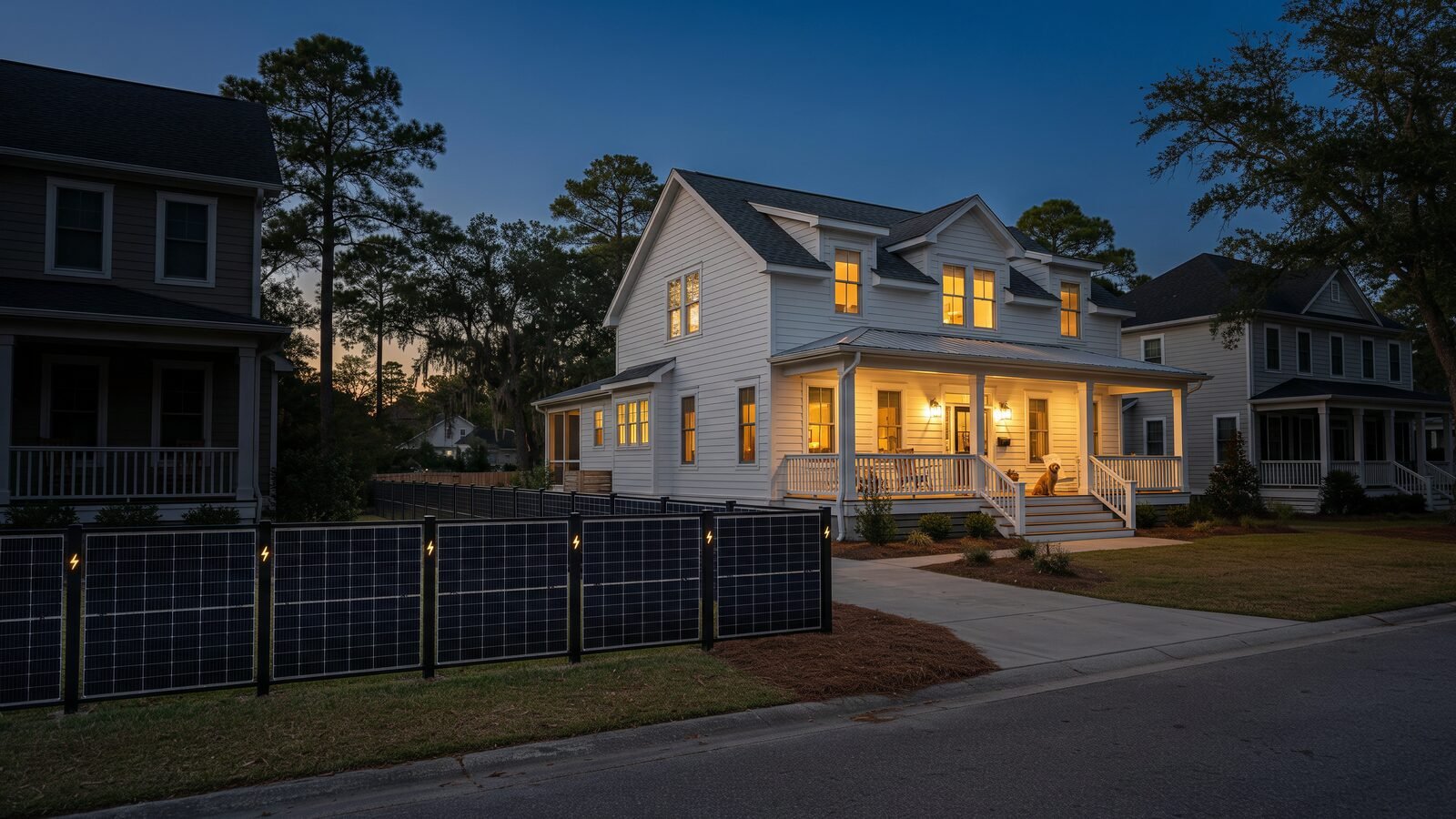
Dusk on a street during an outage, one white house lit with the solar fence in front, the neighbors dark
The outage shot, without the headline.
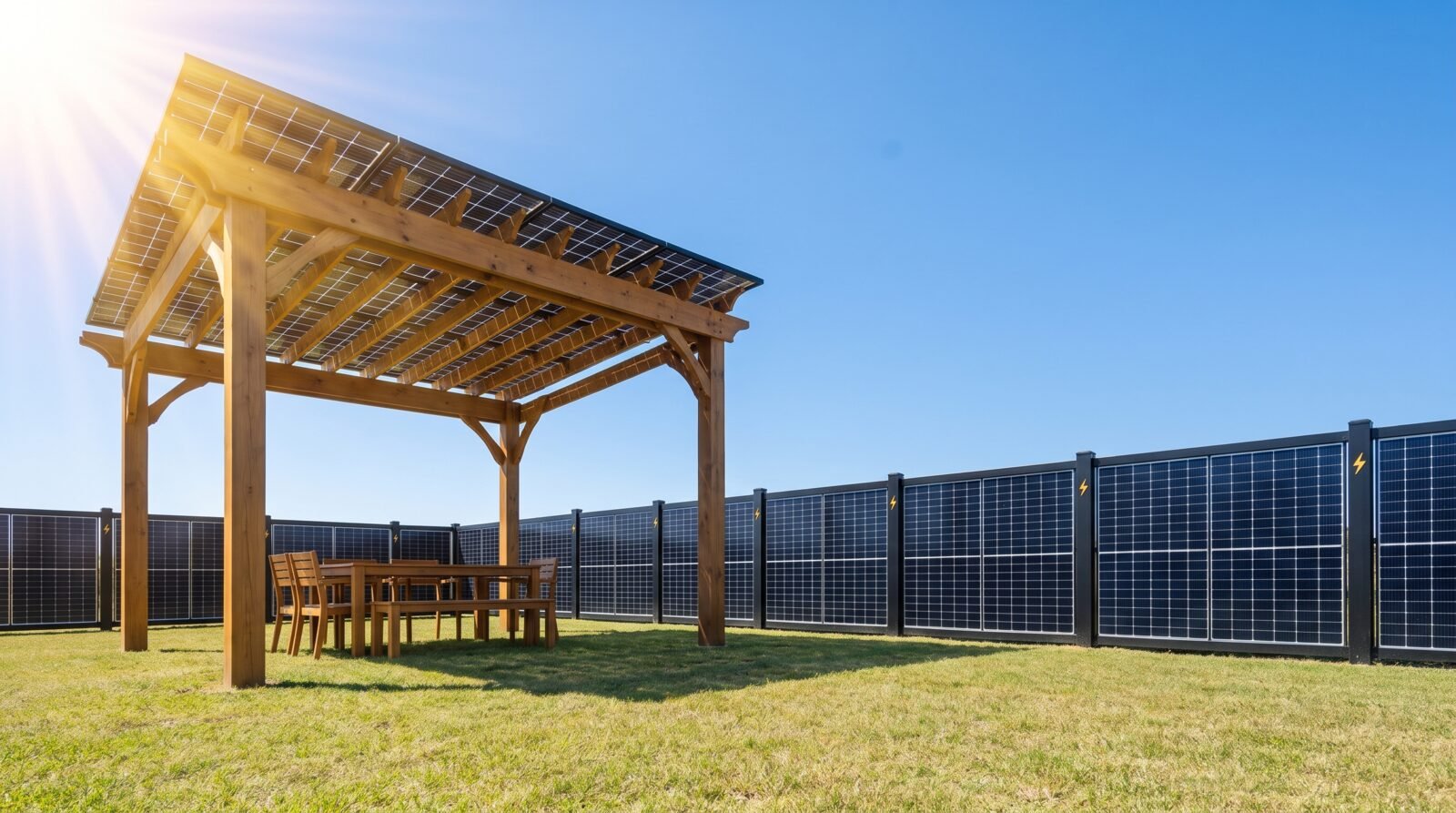
Solar-roofed timber pergola over a table on a sunny lawn with the solar fence behind it
Pergola and fence together. Concept only: this fence came out taller than ours and shows silver panel frames.

For Matt: say each name out loud to one of your generator customers. Which one would they repeat to a neighbor?

Keep reading

Have a question we did not answer? Write to stan@generatorenvy.com. Stan grumbles, but a real person answers.