Most plans are just the first bill. Here’s what usually comes after, and what already comes in a Generator Envy plan set.
How the plan business works
Stock plans have been sold the same way for more than 40 years: printed plan books, then CDs, then websites. The catalogs got bigger. The way you pay didn’t change. You buy a drawing, and then the extras start.
The biggest one is in the fine print. One of the largest plan sites says it outright: most stock plans are not pre-engineered, and they don’t come with a professional stamp. So before you can even ask for a permit, you’re hiring an engineer.
| The usual extra | What it runs |
|---|---|
| Engineer’s stamp | Not included with most stock plans. You hire one licensed in your state. |
| Stamped drawing for a solar mount | $500 at one supplier |
| Each revision to that drawing | $350 every time |
| Small plan changes (foundation, site plan and so on) | $299 each at one plan seller |
| Bigger changes | $900 to $1,500, about 4 to 6 weeks |
| License to build it more than once | $999 more |
| A stamp you can use again | Seals are good for one site only |
| Plumbing, heating and A/C drawings | “The typical plan set does not include” them |
| Refunds | “All sales are final” |
Figures from the published price lists and terms of national stock-plan sellers, a timber structure maker and a solar mount supplier, checked November 2026. Prices change.
Every extra is also a wait. Here’s the usual order:
You were ready to build in the spring. Now it’s fall. That’s where a lot of backyard projects stall. Not over money. Over the runaround.
The Generator Envy way
Each design is engineered one time, the hard way, so every kit after that ships with stamped drawings for the building permit. You don’t start by hunting for an engineer.
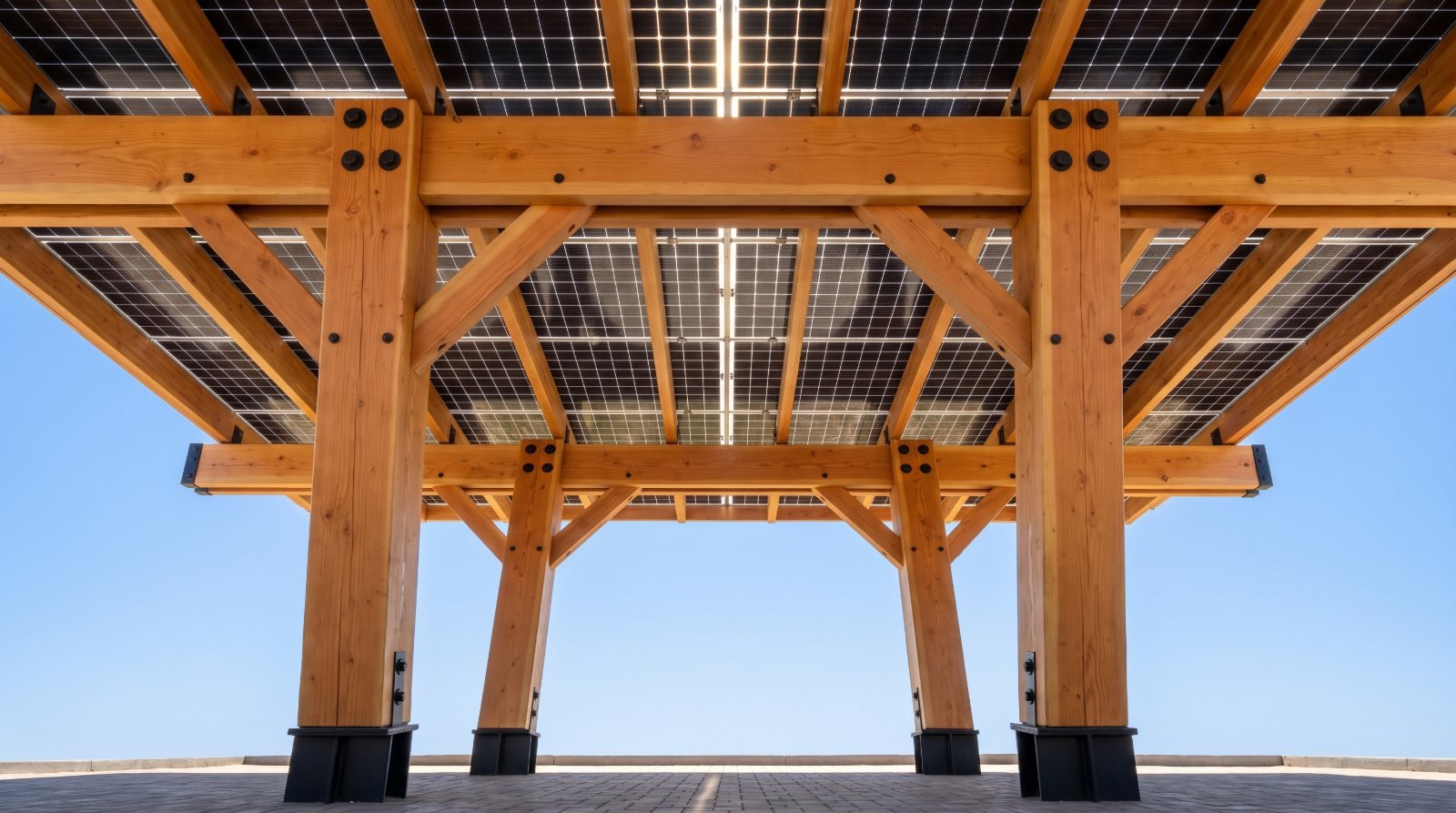
The timbers are laid out around standard solar panel sizes, with the wire paths hidden inside the frame. The solar isn’t a second job for a second designer.
The standard sizes come complete. Need it bigger, smaller or shaped to your lot? You get a fixed price for the change before any work starts.
Electrical work is done by a licensed electrician, with the permits. The drawings already show where the wires run.
This is the part you care about. No engineering to chase. No drawings to redraw for every customer. No week lost waiting on a revision. You show the customer the design, order the kit, and pull the permit while they’re still excited about it.
The steps, our way:
Generator Envy kits are in development. Get on the list and we’ll tell you when your size is ready.
Most are not. Large plan sellers say most stock plans are not pre-engineered and do not carry a professional stamp, so buyers hire a local engineer before applying for a permit.
No one can promise that. Your permit office still checks the design against your lot: zoning, setbacks and the foundation. Ready to permit means the engineering and drawings are done before you ask, so you aren't starting from scratch.
The standard sizes come complete. For a bigger, smaller or custom-fit version, you get a fixed price for the change before any work starts.
A licensed electrician, with the permits. The kit drawings already show where the wires run inside the frame.
Ten solar panels on a rack in the yard can refill a home battery on a sunny day, so the generator stays off.
Read it →
A post and beam hot tub gazebo gives the tub shade and rain cover, and its solar roof helps pay to keep the water hot.
Read it →
A post and beam backyard pavilion with a solar panel roof: shade for the patio or outdoor kitchen, power for the lights, fans and fridge, and a batter
Read it →
Have a question we did not answer? Write to stan@generatorenvy.com. Stan grumbles, but a real person answers.
 Generator