Heavy posts and beams with solar panels for the roof. It charges the car, helps run the hot tub and keeps the essentials on in an outage, with no hookup to the power company.

We build six fixed plans and nothing custom. Every one uses the same solar panel, the same rough sawn, pressure-treated 8x8 posts, the same paired 4x10 beams bolted through the posts, and the same bay, three panels wide. A longer plan is the same building with one more bay.
That is how we can put a price on each one. The timber list, the wiring and the engineer’s drawings are worked out once for each plan, not once for each customer. Every plan carries the same 12 kW inverter and two batteries, about 10 kWh. That is more than the smallest plan needs, and it keeps one wiring layout across all six.
| Plan | Roof | Solar roof | Average day | Target price |
|---|---|---|---|---|
| Hot Tub Pergola | One slope, 11 x 11 ft | 6 panels, 2.6 kW | about 10 kWh | $22,500 |
| Patio Pergola | One slope, 23 x 11 ft | 12 panels, 5.3 kW | about 20 kWh | $28,500 |
| Poolside Pergola | One slope, 34 x 11 ft | 18 panels, 7.9 kW | about 30 kWh | $35,000 |
| One-Car Carport | Gable, 11 x 22 ft | 12 panels, 5.3 kW | about 18 kWh | $27,500 |
| Pavilion | Gable, 23 x 22 ft | 24 panels, 10.6 kW | about 35 kWh | $38,000 |
| Two-Car Carport | Gable, 23 x 22 ft | 24 panels, 10.6 kW | about 35 kWh | $38,000 |
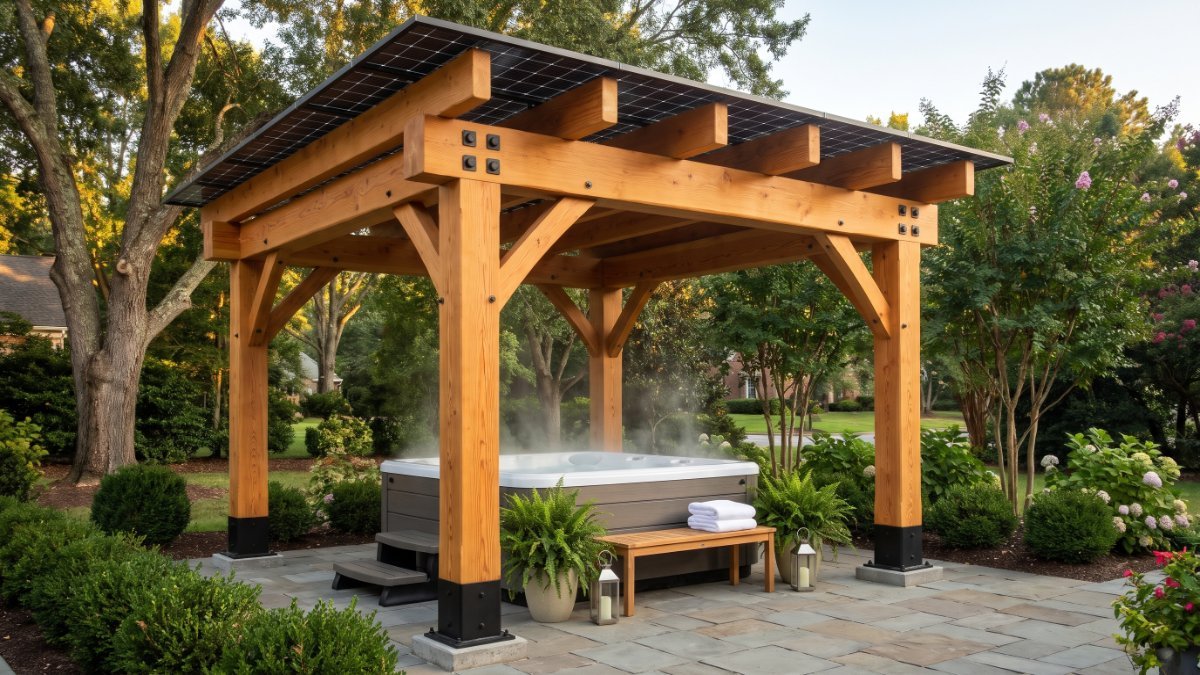
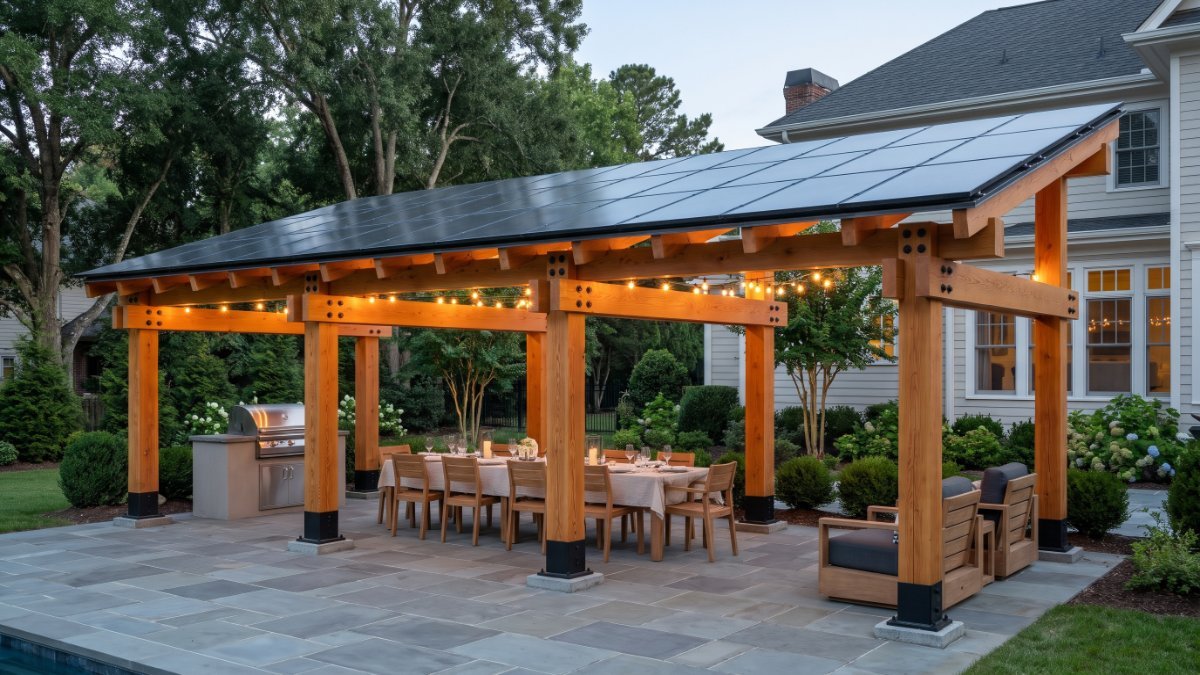
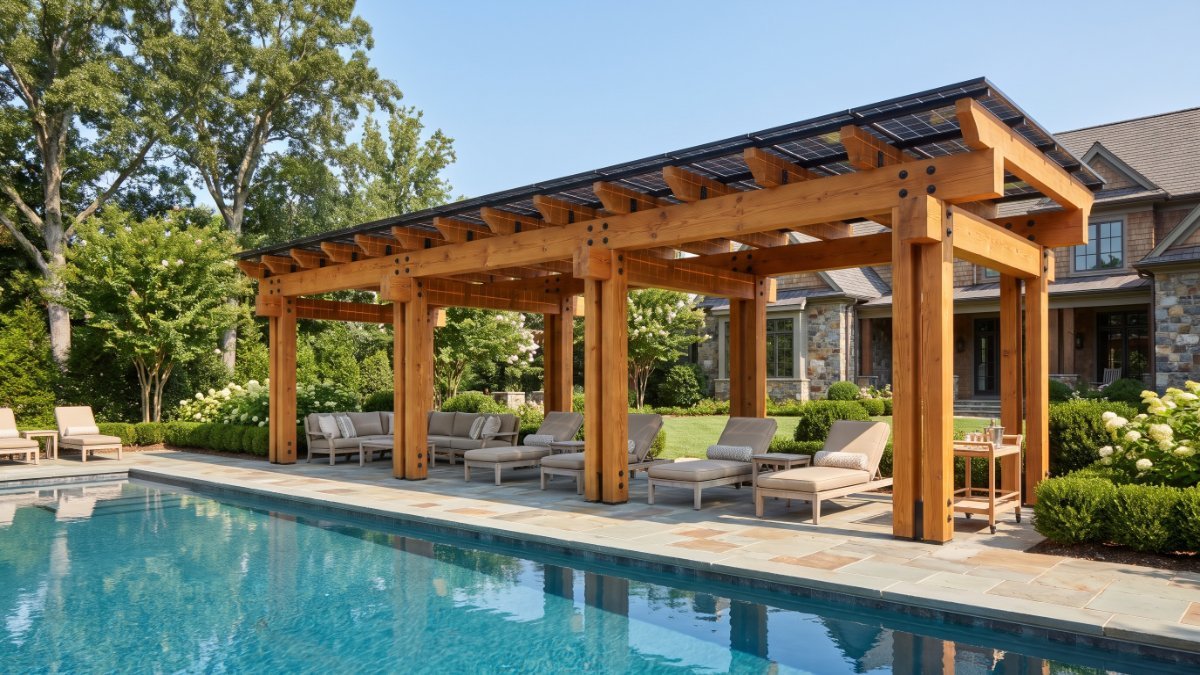
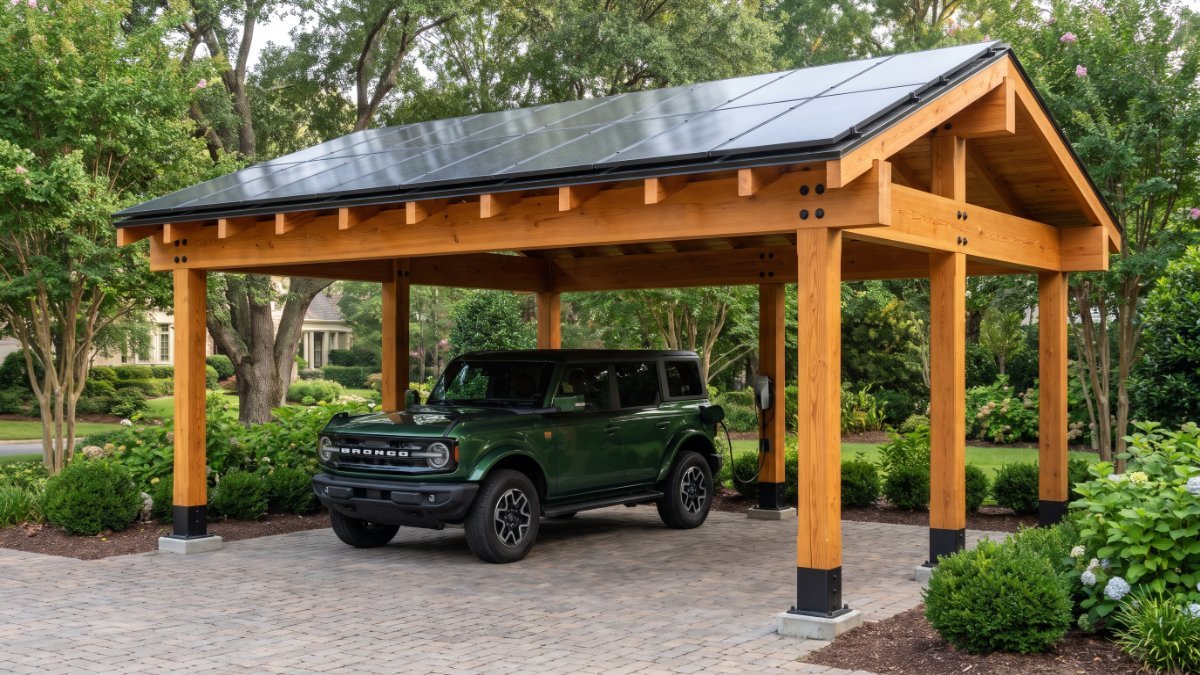
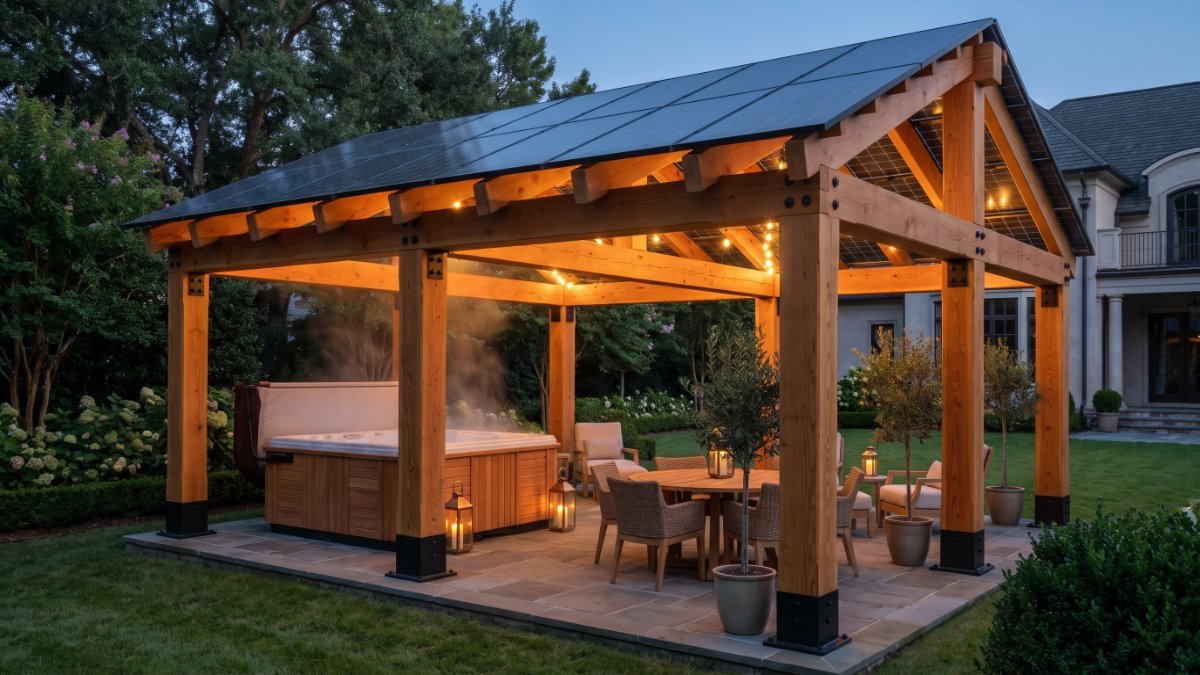
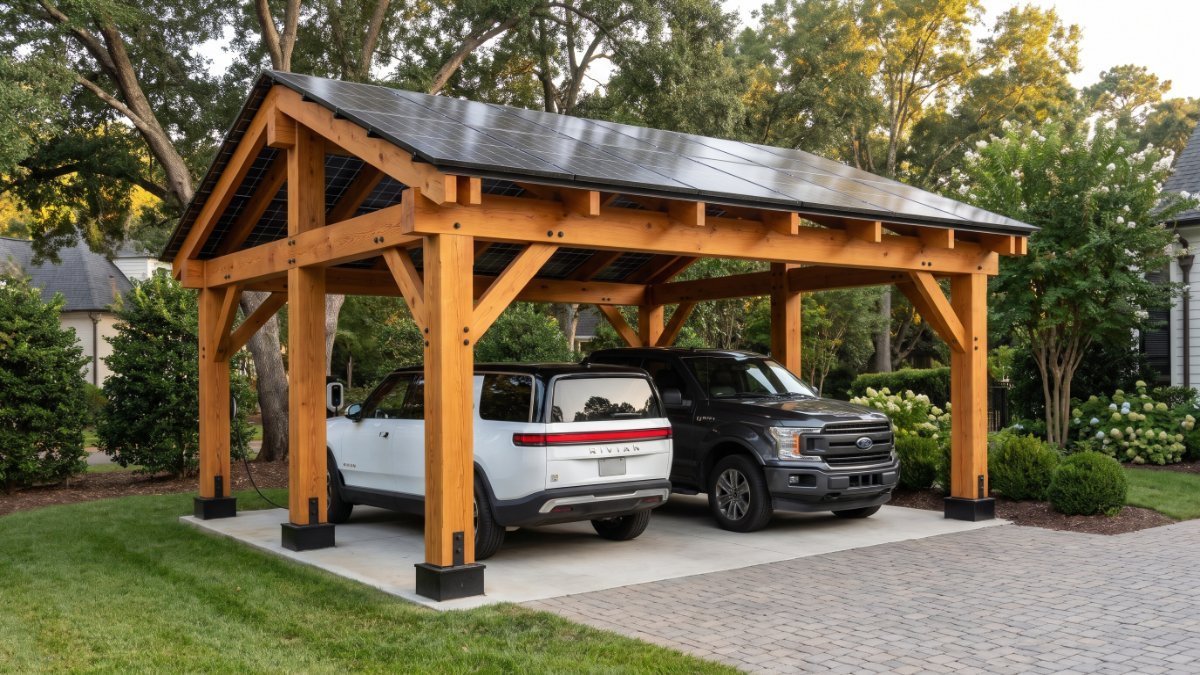
Target prices are built and wired in eastern North Carolina, with the footings, the engineer’s stamp and the permits in the price. The carport is budgeted line by line below. The four smaller plans are priced from the same lines, and the first build of each will settle its number. The floor under it, pavers or a slab, is not in the price. Average-day power is a PVWatts estimate for Charlotte.


| From the first day | With a cord or buried cable to the house |
|---|---|
| The car. A hot tub. A pool pump. Lights, fans and outlets under the roof. | The refrigerator, freezer, well pump, furnace and lights in the house, through the same kind of inlet a portable generator uses. |
It never sends power to the grid, so there is no net metering, no interconnection agreement and no waiting on the power company. The inlet at the house still gets an electrical permit and an inspection, like any generator hookup.
About 10 kWh of battery carries a refrigerator, the fan on a gas furnace, the internet and some lights through a night. It is not whole-house backup. On a gray week, a small generator or a plug-in charger tops up the batteries.
Every line of the carport, the way we budgeted it. The lines come to $36,530, and the $38,000 target holds $1,470 in reserve for whatever the first build turns up. The pavilion is the same frame with a hot tub circuit in place of the car charger, and carries the same $38,000 target. The engineer’s stamp and the permit fees are in the price.
| The carport | Budget |
|---|---|
| 24 solar panels | $3,600 |
| Seam gasket, drip channels and gutter | $2,000 |
| Timber and hardware | $8,000 |
| Footings | $2,800 |
| Inverter and two batteries | $3,880 |
| Wiring, cabinet and outlets | $2,000 |
| Car charger | $450 |
| Labor, craftsman and electrician | $11,500 |
| Engineer’s stamp and permits | $2,300 |
| Total | $36,530 |
Panels, inverter, batteries and charger are listed prices. Timber, footings, labor and engineering are our estimates until a craftsman prices the first one. These numbers assume inland wind; a coastal build needs the engineer’s numbers first.
Not in the price: the hot tub itself, a generator, the cord or buried cable to the house, unusual site work, and anything your HOA asks for.
| Craftsman | Licensed electrician | You |
|---|---|---|
| Footings, the frame, the panel roof and the cabinet | Connects the panels, inverter and batteries, the outlets, the car charger and the inlet to the house | Choose the spot, hire the electrician, and plug things in |
In North Carolina a job under $40,000 does not need a general contractor license, and both buildings are priced to stay under it. The job needs a building permit and an electrical permit from your county. Approval depends on your county, setbacks, flood zone and HOA, so we look at those before anyone pours a footing.
Where things stand: both designs are drawn and priced line by line. None has been built yet; the first ones are planned for eastern North Carolina.
It is for someone who wants a handsome building in the yard that also makes its own power, quietly, and keeps the essentials going when the lines go down.
A solar structure is one piece of a backup plan. Here is how it sits next to the equipment people already ask about.
In North Carolina a job under $40,000 does not need a general contractor license. Both buildings are priced to stay under that line, so a skilled local craftsman can build them.
No. It runs on its own from the first day, so there is no application to the power company and no waiting on them. If you want it to help run the house, a cord or a buried cable goes to the same kind of inlet a portable generator uses.
The batteries carry the evening and the night. For a gray week, a small generator or a plug-in charger tops them up.
No. The panels, inverter, batteries and charger are listed prices. The timber, footings, labor and engineering are our estimates until a craftsman prices the first one. A coastal build needs the engineer’s wind numbers first.
Yes, later, by hiring a mason yourself. With a fireplace built in from the start, the job goes over $40,000 and needs a licensed general contractor.
A post and beam RV carport tall enough for a motorhome or fifth wheel, with a solar roof that keeps the rig out of the sun and powers the house.
Read it →
A heavy-timber solar carport sized for two full-size trucks: how much power it makes, how it charges your EV, and how it keeps the house running in an
Read it →
A 6-foot privacy fence made of two-sided solar panels: power vs.
Read it →
Have a question we did not answer? Write to stan@generatorenvy.com. Stan grumbles, but a real person answers.
 Generator